Capital Region Living Home
Company Overview
Staff
Advertisers
Media Kit
Magazine Subscriptions
Testimonials

Capital Region Living: February 2008 Archives

Arts & Entertainment

user-pic
Vote 0 Votes Saratoga News & Events

Galleries

Upstate Artists Guild

247 Lark Street, Albany

426.3501; www.upstateartistsguild.org

Hours: Thursday & Friday 5:30pm-8pm; Saturday 2pm- 8pm; Sunday 2pm-6pm.

March 7-28
The Green Show
—Featured artist Michael Weidrich.

March 7
1st Friday Films
– 9pm.

March 14
Poetry @ the UAG
- Deborah Poe & Nicole Karas. 6:30pm- 9pm.

March 28
Poetry @ the UAG
- Jaqueline Jones LaMon & Carol Graser. 6:30pm-9pm.

April 4-25
WTF?
—An exhibit of contemporary folk art from across the nation.

April 11
Poetry @ the UAG
– Stephen Cope & Mary Panza. 6:30pm-9pm.

April 25
Poetry @ the UAG
– Rebecca Wolff & Sam Truitt. 6:30pm-9pm.

May 2-23
Dream Wheels
– Art of and about the bicycle.

June 6-27
The People’s Choice Art Show
—In conjunction with Art on Lark, with this year’s special feature of Kids’ Art.

The Clement Art Gallery

201 Broadway, Troy

272.6811; www.clementart.com

Hours: Monday-Thursday 10am–6pm; Friday 10am- 7pm; Saturday 10am–4pm.

Through March 26
Carolou Kristofik
– Still Life: Glorifying Reality

Upcoming Exhibits
March 28–April 23
Deborah Bailey

April 25–May 28
Laura VonRosk

May 30–June 25
Chris Murray

June 27–July 23
Egg Tempera Exhibition

Albany International Airport Gallery

737 Albany Shaker Road, Albany (third floor)

242.2241

Hours: 7am–11pm daily.
Free and open to the public.


Exhibits
Through March 30
Farsighted—Thirteen artists traverse 13 countries, from Morocco to Iceland, Cuba to India, Belize to the Czech Republic in this exhibition, which combines photographic prints, projections and field recordings, sculpture and travel ephemera that resonate with the lure of distant lands, people and cultures.

Gallery 100

462 Broadway 2nd Floor, Saratoga Springs

580.0818; www.gallery100.net

Hours: Thursday-Sunday 11am–5pm or by appointment

March 29-30
Interiors Weekend Open House
—12pm–5pm

Through April 5
Introducing Gallery 100 Print Collection.

April 10-May 18
Featuring Gallery Artists

May 22–June 21
Gallery 100 Presents Artwork from The Arts Student League – “On the Lighter Side”.

June 26– July 27
Paul Kolnik presents Children’s Ballets from the New York City Ballet.

Lake George Arts Project’s Courthouse Gallery

1 Amherst Street, Lake George

668.2616; www.lakegeorgearts.org

Hours: Tuesday-Friday 12pm-5pm; Saturday 12pm-4pm (during exhibitions); all other times by request.

March 2
Bands ‘n Beans—Lake George Arts Project’s 17th annual festival of chili and music. 2pm–7pm. Admission is $20 with tickets available at the door. Roaring Brook Ranch, Lake George.

March 15-April 18

Paintings by Douglas Durning and ceramics by Myung Rye Kim.

May 10-June 13

Paintings by Yasemin Kackar Demirel.

Nicole Fiacco/Modo Gallery

506 Warren Street, Hudson

828.5090; www.modogallery.com

Hours: Thursday-Monday 12pm–6pm; closed Tuesday and Wednesday.

Exhibits
March 15-April 19
Unbelievable: Christopher Haun

April 26-May 31
Ken Polinskie: Recent Paintings and Works on Paper.

Incident Report

348 Warren Street, Hudson

jwhstrodl@gmail.com

Hours: Open 24 hours.
Through March

Contemporary Portraits of Abraham Lincoln in Fibers by Local Artist Oscar Strodl—Working in roving wool (raw wool floss before it is spun), thread, and yarn, Strodl creates haunting portraits of the 16th American president that explore the complex, often contradictory, sides of Lincoln as a man, president, and American icon.

Museums

The Arkell Museum

2 Erie Boulevard, Canajoharie

673.2314; www.arkellmuseum.org

Hours: Monday-Friday 10am–5pm; Saturday-Sunday 12:30pm–5pm.
Admission: Adults $7; seniors and students $5; children age 11 and under free.

Film Series

March 14
West Side Story – 7:30pm. $4 donation.

March 28
In America – 7:30 pm. $4 donation.

April 11
The Namesake – 7:30pm. $4 donation.

April 25
Sweet Land – 7:30pm. $4 donation.

Exhibits
March 9- June 8
Caricature, Politics and Immigration: Ethnic Images from the Appel Collection and Politcal Cartoons from the Arkell Museum - Original art by the cartoonists Gilliam and Zimm will be shown alongside “Judge” and “Punch” magazine illustrations.

June 27- September 21
Wyeths from the Farnsworth Art Museum Collection - Watercolors and oil paintings by three generations of America’s most famous family of artists.

Through July 20
Famous and Fabulous Portraits from George Washington to the Golden Girl - Portraits by some of America’s best known artists from the 18th through the early 20th century.

Albany Institute of History and Art

125 Washington Avenue, Albany

463.4478; www.albanyinstitute.org

Hours: Wednesday-Saturday 10am-5pm; Sunday 12pm-5pm; Monday and major holidays closed; Tuesday pre-registered groups only.
Admission: Adults $8; seniors and students $6; children ages 6-12 $4; children ages 5 and younger free.

Ongoing Exhibits

19th Century American Sculpture: Erastus Dow Palmer, Launt Thompson, Charles Calverley. Sculpture Court.

The Landscape that Defined America: The Hudson River School. Hudson River School Gallery.

Traders and Culture: Colonial Albany and the Formation of American Identity. Colonial Albany Gallery.

Ancient Egypt. Ancient Egypt Gallery.

Sense of Place:18th and 19th Century Paintings and Sculpture. Lansing Gallery.

Albany Institute of History & Art’s Entry Point Gallery – Recently reinstalled with new objects from its collection, including: oil paintings by Bill Sullivan, Ridgefield Athletic Club Toboggan Coat, a cast iron stove made by the Washington Stove Works, a poster by the New York Central railroad and much more.

Exhibits
Art & Nature: Hudson River School Paintings—This newly installed and redesigned exhibition will feature over 20 paintings by artists such as Thomas Cole, Asher B. Durand, Jasper Cropsey, James Hart, William Hart, John Kensett, Homer D. Martin, David Johnson, John Casilear and George Inness.

Through June 1
Venetian Scenes by Walter Launt Palmer—This exhibition will include 10 paintings, along with sketches, diaries, photographs and account books related to Palmer’s Venetian work.

Through May 25
Horsing Around: 19th Century Cast Iron Hitching Posts—The exhibition will include approximately 70 hitching posts along with a selection of paintings, prints, broadsides and sculptures of the horses that used posts. Also included will be a small selection of patterns, trade catalogues, photographs, and other supporting material.

Through May 25
The Folk Spirit of Albany: Folk Art from the Collection of the Albany Institute of History & Art - Drawn from the museum’s collection of folk art dating from the 18th century to the present, this exhibition will include paintings by Ammi Phillips, Mary Gridley, Horace Bundy, Thomas Chambers, and Fritz Vogt; quilts, mourning pictures, and textiles; stoneware by Paul Cushman and a variety of materials made by unidentified artists.

Through May 25
Cast with Style: 19th Century Cast-Iron Stoves from the Albany Area - This exhibition, drawn from the museum’s well-known collection will include 30 stoves complemented by prints, drawings, photographs, stove catalogues, and advertising materials.

Gallery Talks
March 9
“Cast with Style” - 2pm. Free with museum admission.

April 6
“Venetian Scenes” by Walter Launt Palmer – 2pm. Free with museum admission.

April 13
“The Folk Spirit of Albany” – 2pm. Free with museum admission.

The Hyde Collection

161 Warren Street, Glens Falls

792.9197; www.hydecollection.org

Hours: Tuesday-Saturday 10am-5pm; Sunday 12pm-5pm; closed Monday and all national holidays.
Admission: Free, but donations are appreciated.

March 16
deBlasiis Chamber Music Series Concert – Free. 3pm. Helen Froehlich Auditorium.

April 1
deBlasiis Chamber Music Series Concert – Free. 7:30pm. Church of the Messiah, 296 Glen Street, Glens Falls.

May 12
deBlasiis Chamber Music Series Concert – Free. 7:30pm. Helen Froehlich Auditorium.

Through March 23
Elihu Vedder and Italy: Includes approximately 24 works by Vedder drawn from The Hyde’s own holdings and several loans from the esteemed collection of Simon Parkes. Includes paintings, drawings, a relief sculpture and three illustrated books by the artist. Hoopes Gallery.

Through April 13
Art in the ‘Toon Age: Examines the impact of cartoons and graphic styles on three generations of visual artists who worked in this style from the 1960s until the 1990s. Drawn from the collections of the Kresge Art Museum, it features 43 works by 32 artists from seven countries. Charles R. Wood Gallery.

June 8
A Glens Falls Legacy: The Pruyn Family—The Pruyn family, of Finch Pruyn and Company fame, exerted a tremendous impact on the economic, cultural, educational and civic life of Glens Falls from its earliest days. The exhibition is divided into two installations that explore the family’s legacy, their cultural pursuits and contributions to the city of Glens Falls. Charles R. Wood Gallery.

New York State Museum

Madison Avenue, Albany (Empire State Plaza)

474.5877; www.nysm.nysed.gov

Hours: Open daily 9:30am-5pm.

Through March 2
Look-Alikes: The Amazing World of Joan Steiner. Crossroads Gallery.

Through March 16
Expressions in Blue: A Feeling, A Place, A Color, A Sound. Exhibition Hall.

April 5
Invaders—Hundreds of species of non-native plants, animals and viruses live here in New York State. Most of these newcomers have little or no effect on the biological balance of our state. Some, however, have a negative and dramatic effect on the ecosystems in which they settle. Learn about these creatures that could be living right in your backyard. Crossroads Gallery.

Ongoing Exhibits
Art for the People: Decorated stoneware from the Weitsman Collection—Feauturing 40 uniquely decorated stoneware vessels, including jugs, crocks, pitchers, jars and water coolers from the 19th century, considered to be prime examples of American Folk Art. New York Metropolis Hall.

Black Capital: Harlem in the 20’s – Learn about the rich and diverse culture of Harlem in the 1920s through historic photographs, archival material, audio and visual components, artifacts and other items. New York Metropolis Hall.

Fire Engine Hall - Come and visit many examples of fire apparatus of all times from the 18th, 19th and 20th centuries, all with a history of service in New York. Each apparatus is unique in function and form.

The World Trade Center: Rescue, Recovery, Response – Details the history of the World Trade Center, the September 11 attacks, the rescue efforts, the evidence recovery operation at the Fresh Kills Facility and the public response to the events. Inclues many objects, images, video, and interactive stations documenting this tragic chapter in New York and America’s history.

Schenectady Museum & Suits-Bueche Planetarium

Nott Terrace Height, Schenectady

382.7890; www.schenectadymuseum.org

Hours: Tuesday-Sunday 10am-5pm.

April 5 & 6
NanoDays—Celebrate a national week of nanoscale science and engineering public outreach events. 12:30pm-3:30pm. Free with museum admission.

April 12 & 13
Fetchstival – Come celebrate the grand opening of the Museum’s new Fetch Lab. Enjoy activities inspired by the popular PBS television show Fetch. 12pm-4pm. Free with museum admission.

April 17 & 19
Little Wonders of Science: Make Way for Ducklings—It’s never too early to introduce a child to the wonders of science! Bring children ages 3-5 to discover the science of duck and inspire curiosity with storytelling and make-and-take activities. 10:30am-11am. Free with museum admission.

May 15 & 17
Little Wonders of Science: Yertle the Turtle

May 24 & 25
Adventures in Science Weekend

June 19 & 21
Little Wonders of Science: Curious George Goes Fishing

June 20
Schenectady Museum Gala

June 28 & 29
Adventures in Science Weekend

Exhibits
Through April 20
Cities @ Night—Discover how the Capital Region brought light to cities and towns all across the United States. Based in Schenectady, the GE Illuminating Engineering Laboratory transformed exterior lighting from pure functionality to a science and an art.

Ongoing Exhibits
Inside Out: MRI and You—Explore the science behind a landmark medical imaging system developed right here in the Capital Region.
Power House—This exhibit illustrates the huge impact science has on our everyday lives. Experiment with science principles at play in everyday life with new hands-on, brains-on interactives like the Invisible Man, the Battle of the Giant Magnets, and the Bridge of Fire.

Fueling the Future—Explore opportunities and challenges of different fuels, including gasoline, ethanol, hydrogen, biodiesel, electricity, and even horsepower. See how different fuels affect the economy and the environment, with interactives, images, video, and artifacts from our collection, including a one-of-a-kind prototype electric car developed by GE in 1978.
Chemical Innovation: Developing the Essentials—This exhibit explores the essential role of chemistry in everyday life and commemorates the 100th anniversary of SI Group (formerly Schenectady International).

Tang Museum, Skidmore College

815 North Broadway, Saratoga Springs

580.5000; www.skidmore.edu

Exhibits
Through April 13
Molecules that Matter—Showcases 10 molecules that have profoundly altered our world. Featuring large-scale molecular models, contemporary art by nationally recognized artists and everyday objects.

Through April 20
Smack—The artists in “Smack” use distinct actions, like scratching, stomping, or dragging, to explore specific sounds. These sounds come from performance-based gestures, whether they are choreographed or left to chance.

Through June 8
Joseph Grigley: St. Cecelia—Joseph Grigely creates works that explore the failures, idiosyncrasies, and ruptures of language and communication.

Events
March 1
Dance +18 Festival —Featuring over 40 classes in ballet, modern, ethnic, jazz, tap, body workshops and more. There are specific classes designed for children age 4 to 12, teens, adult beginners, as well as experienced dancers. 10am-5:30pm. Dance Center.

March 4 & April 9
Curator’s Tour of “Joseph Grigley: St. Cecelia” – 12pm. Free. Tang Museum.

March 20
Dunkerley Dialogue with Playwright Drew Sachs—Sachs discusses the challenges of writing “I Am Not Breakfast,” a play that follows the experiences of a young teacher’s aid at a school for the deaf. 7pm. Free. Tang Museum.

March 20
Chris Potter’s Underground—Saxophonist Chris Potter with guitarist Wayne Krantz, keyboardist Craig Taborn, and drummer Nate Smith. 7:30pm- 10pm. $5 general admission; $2 students and seniors.

April 4
Curator’s Tour of “Molecules that Matter” Exhibition—12pm. Free. Tang Museum.

April 18, 19, 25, 26
Spring Dance Concert—8pm; April 26; 3pm. Adults $10; students & seniors $5.

The Children’s Museum at Saratoga

69 Caroline Street, Saratoga Springs

584.5540; www.cmssny.org

Hours: July 1—Labor Day: Monday-Saturday 9:30am-4:30pm; Labor Day-June: Tuesday-Saturday 9:30am-4:30pm, Sunday 12pm-4:30pm.
Admission: $5; children under 1 are free.


March 2
Seussian Celebration—Help celebrate Dr. Seuss’s Birthday. Special quest readers, fun rhyming games for all ages, crafts with Thing 1 and Thing 2, and a Dr. Seuss inspired make and eat treat.Visitors that wear their favorite silly, mixed-up pair of socks will get a special sticker! 12pm-4:30pm.

March 9
Kid’s Art Gallery Show Walk-About—The opening reception to celebrate Children’s Art Month. Several galleries on Beekman Street in Saratoga will have children’s artwork on display for the month of March. 1pm–4pm.

April 6
Junior Hobby Extravaganza—Come learn about what kids like to do and collect. Local children ages 8-13 will be displaying their collections and talking about their hobbies with visitors. Children can apply to be an exhibitor using the application online at www.cmssny.org or by requesting one at the front desk. 12pm–2:30pm.

The National Bottle Museum

76 Milton Avenue, Ballston Spa

885.7589; www.nationalbottlemuseum.org

Hours: Winter hours: Monday –Friday 10am–4pm; June 1—September 30 10am–4pm daily.

April 12 & 13
Sally Prasch – Glass artist Sally Prasch will teach a two-day lampworking class at Museum Glassworks, the teaching studio of the National Bottle Museum. $250, which includes all supplies. 9:30am-4:30pm. To register or for more info: nbm@crisny.org.

May
Mixed Media – Paintings by Heidie Merecki.

June
Antique Bottle Show & Sale—Collectors and dealers from coast to coast and Canada. Featuring antique bottle sales, info and educational displays. Ballston Spa High School.

The Farmer’s Museum

5775 State Hwy 80, Cooperstown

607.547.1450; www.farmersmuseum.org

Hours: April 1-May 12 Tuesday-Sunday 10am- 4pm; May 13-October 13 daily 10am- 5pm.
Admission: April 1-May 12 adults $9; seniors $8; children 7-12 $4; under 7 free. May 13-October 13 adults $11; seniors $9.50; children 7-12 $5; under 7 free.

Through October 31
Ice Cream: Our Cool Obsession - Exhibition exploring the rich history of ice cream, from its ancient origins through the present day.

Fenimore Museum

5798 State Highway 80, Cooperstown

607.547.1400; www.fenimoreartmuseum.org

Hours: April 1-May 12 Tuesday-Sunday 10am- 4pm; May 13-October 13 daily 10am- 5pm.
Admission: Adults $11; seniors $9.50; children 7-12 $5; under 7 free


April 1- May 11
Rural Icons: Photographs by Richard Walker—An exploration of the declining agricultural landscape and its architectural legacy in upstate New York.

April 1- August 10
Gustav Stickley: The Enlightened Home—This exhibition features approximately 40 pieces of Stickley furniture which exemplify Gustav Stickley’s philosophy of living.

May 24- September 1
Gilded Lions and Jeweled Horses: The Synagogue to the Carouse—These exuberant carvings stand as a testament to a history of survival and transformation as immigrant Jewish artists transferred symbolic visual elements into a vernacular American idiom.

Saratoga Automobile Museum

110 Avenue of the Pines, Saratoga State Park

587.1935; www.saratogaautomuseum.org

Hours: May-October daily 10am- 5pm; October-April Tuesday-Sunday 10am- 5pm.
Admission: Adults $8; students 17 and older with I.D. $5; seniors and active military $5; children 6-16 $3.50; children under 6 free; members free.


Through June 1
Romance of the Roadster – A collection of 15 convertible roadsters including a 1916 Stanley Steamer 726 Roadster, a 1938 Jaguar SS100, a 1939 Ford Convertible Coupe, and more.

Opened January 1
Syracuse Mile—Exhibit features two of Syracuse’s most famous stock cars, as well as a variety of graphics and memorabilia which, along with huge text panels, will help bring the story of the fabled New York State Fairgrounds track to life.

National Baseball Hall of Fame and Museum

25 Main St., Cooperstown

888.HALL.OF.FAME; www.baseballhalloffame.org

Hours: Labor Day through Memorial Day: 9am- 5pm; Summer hours 9am- 9pm
Admission: Adults $14.50; seniors and veterans $9.50; children 7-12 $5; members and children 6 and under free.

Exhibits
Sacred Ground - More than 200 artifacts that span more than 125 years of baseball history and numerous interactive displays organized into six overall themed sections: Fans, Ballpark Business, Evolution of the Ballpark, The Stadium World, Reverence and Ballpark Entertainment.

Pride & Passion: The African American Baseball Experience - Includes information on many black pioneers in baseball history, as well as a chronological timeline tracing notable events in both African-American cultural history and black baseball from the 19th century to the present.

Diamond Dreams – Honors women’s role in the national pastime featuring three main segments: On the Field, In the Office and In the Stands.

Club 3,000 - Pays tribute to the men who have collected 3,000 hits and 3,000 strikeouts, two of the most exclusive clubs in all of sports.

Taking the Field: The 19th Century—Examines baseball’s historical beginnings, communicating a learning experience through over 150 artifacts.

National Museum of Dance

99 South Broadway, Saratoga

584.2225; www.dancemuseum.org

Hours: Opens May 24. Tuesday-Sunday 10am- 5pm.
Admission: Adults $7.50; seniors and students $5; children 12 and under $3.

Through October 2008
“On Broadway” – The evolution of dance on the Broadway stage starting with the Ziegfeld years in the early 1900s to the present day era of the Jukebox Musical.

Norman Rockwell Museum
9 Glendale Road, Route 183, Stockbridge, MA
413.298.4100; www.berkshireweb.com

March 1
The Business of Art: Self-Publishing Your Comics—Join illustrator Alec Longstreth for this special focus on the business of comics! Aspiring artist or those who are new to the genre are welcome. Participants are invited to bring a portfolio for review. 1pm- 4pm. $10; $5 museum members.

Exhibits
Norman Rockwell’s 323 Saturday Evening Post Covers - This comprehensive exhibition of original Saturday Evening Post cover tear sheets features each of Norman Rockwell’s illustrations for the publication, created between 1916 and 1963.

The Art of Norman Rockwell: Highlights from the Collection—The largest and most significant public collection of original works by the celebrated 20th century illustrator, the exhibits includes a comprehensive array of paintings, drawings, studies, photographs, and artifacts that reflect the evolution of the artist’s life and career.

Through May 26
LitGraphic: The World of the Graphic Novel—This comprehensive exhibition explores the history and diverse artistry of the graphic novel, featuring personal commentary and artworks by celebrated historic and contemporary practitioners. Original book pages and studies, sketchbooks and video interviews provide insights into an evolving and exciting art form.

Bennington Museum

75 Main Street, Bennington, VT

802.447.1571; www.benningtonmuseum.org

Exhibits
Through March 2
Annual Student Art Show—See what the talented students of the region are producing in an elegant gallery setting. Art in all media by students in grades K-12.

Through March 15
Local Artist: Lauren Silver—She creates abstract ceramic sculptures that evoke organic forms, resembling fungi, pine cones, or sea creatures encrusted with a patina of age, yet they are not. They are independent entities that remind us of the natural world that surrounds us while retaining their autonomy as unique works of art.

Through March 25
Paul Feely—Help celebrate the 75th anniversary of Bennington College with one of the best-known artists to have instructed there. Paul Feeley’s color field paintings are sure to delight visitors of any age.

March 13–May 4
Simon and Herta Moselsio—Celebrate the 75th anniversary of Bennington College with paintings and sculpture by early professors Simon and Herta Moselsio.

March 22–May 3
Local Artist Program: Jack Metzger—He creates photographs and sculptures from interesting old found objects and allows the beauty of these seemingly mundane objects to speak through the ages.

April 4- June 1
Reimagining the Distaff Toolkit— An exhibition of contemporary art, each of which has at its visible core a tool that was important for women’s domestic labor in the past (the 18th century through World War II).

May 10- June 21
Local Artist Program: Leslie Parke—Parke paints light effects: light reflections, transparencies, translucencies, glitter, sparkle, shimmer. How light affects natural surfaces, such as flowers, shells and water; and artificial surfaces, such as patent leather, foil, Mylar, transparent ribbons, glass, crystal and silver.

Starting June 13
“Take Me Out to the Ball Game”: A Summer of Baseball in Bennington—Three wonderful exhibitions that will bring the history and thrill of America’s past time to life. The triumvirate of exhibitions will be highlighted by a collection of memorabilia related to Joe DiMaggio, considered by many to be the greatest player in the history of baseball.

Events
March 6
“Susan B. Anthony, the Invincible”—A one-woman play starring Sally Matson. The play sheds light on the Underground Railroad, the Civil War, the 13th, 14th & 15th amendments, Susan B. Anthony’s travels out West, and her arrest and trial for voting illegally. 7pm. Free.

March 7
“Silents Are Golden”—A one-man show illustrated with clips from over 50 silent films. A night not to be missed for the film and theater buff. 7pm. $5.

March 29
3rd Annual Appraisal Fair—Bring your treasures to the Bennington Museum for a verbal appraisal by our expert panel of art and antique dealers. 1pm- 4pm. $5 per item to be appraised with a limit of 5 items.

The Clark

225 South Street, Williamstown, MA

413.458.2303; www.clarkart.edu

Hours: Open Tuesday-Sunday 10am- 5pm; closed Monday.
Admission: Free November 1-May 31; June 1-October 31 adults $12.50; free to children under 18 and full-time students with I.D.


Through April 6
Special Installation: Claude Lorrain–New Acquisitions —See for the first time a magnificent group of 16 drawings by the great French landscape artist Claude Lorrain, acquired by the Clark in 2007. Dating from 1630 through the 1680s, these works represent the range of Claude’s draftsmanship—chronologically, thematically, and technically. Several of the drawings are nature studies, including identifiable sites such as Rome and Tivoli.

Through May 4
Remington Looking West—In the late 19th and early 20th centuries, Frederic Remington shaped the American vision of the Wild West with illustrations, sculpture, and painting. This exhibit explores how the artist came to that vision and how that vision evolved throughout his career. It focuses on three iconic works in the Clark collection and brings together works from public and private collections.

Starting June 22
Like Breath on Glass: Whistler, Inness, and the Art of Painting Softly—the first exhibition to explore “painting softly,” a previously unexamined approach to painting exemplified in works by James McNeill Whistler and George Inness.

MASS MoCA

1040 Mass MoCA Way, North Adams, MA

413.MoCa.111; www.massmoca.org

Hours: 11am- 5pm; closed Tuesday
Admission: Adults $12.50; students $9; children 6-16 $5; under five and members free.

Alt Cabaret
March 8
Chelsea Bacon & Sally Rousse: Trickpony – 8pm. $14 in advance; $18 day of show.

May 3
Jenny Scheinmann – 8pm. $14 in advance; $18 day of show.

Cinema Lounge
March 14
Everything’s Cool – 8pm. $7.

March 15
Children in No-Man’s Land – 3pm. Free.

March 15
King Corn – 8pm. $7.

March 27
Plagues & Pleasures of the Salton Sea – 7:30pm. $7.

April 10
Left Behind in Louisiana/South of Ten – 7:30pm. $7.

Galleries
March 27- September 1
Interpretations: Devorah Sperber - Sculptures that at first glance appear to be multi-colored abstractions composed of volumes of common craft materials like spools of thread, map tacks, or marker caps. When viewed through special optical devices like a clear acrylic sphere or a convex mirror, however, recognizable images from art history surprisingly emerge.

Through April 1
Heeseop Yoon: Junkshop—She uses everyday materials like tape and mylar to transform the act of drawing into something heroic and magical presenting recognizable objects in a unique way.

Through spring
Spencer Finch: What Time is it on the Sun?— Finch uses a range of media including pastel, watercolor, photography, glass tile, video, sculpture, and light installation as well as unexpected materials in an attempt to depict the most elusive of subjects - wind, candlelight, even the scent of Brooklyn’s Gowanus Canal.

Music
April 4
Stephen Malkmus and The Jick–8pm. $20 in advance; $25 day of show. Hunter Center.

April 11
Zydeco Dance Party with C.J. Chenier and his Red Hot Louisiana Band – 8pm. $14 in advance; $18 day of show. Hunter Center.

April 26
Kenny Wollesen and the Himalayas—8pm. $20. Hunter Center.

Theaters

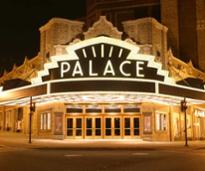
Palace Theatre

19 Clinton Avenue, Albany

465.3334; www.palacealbany.com

March 2
The Pink Floyd Experience. $27-$32. 7:30pm.

March 3
Schindler’s List: Movie Event. $5. 7pm.

March 4
Tommy Fleming: “The Voice of Ireland.” $29.50-$50. 7:30pm.

March 7
Moe. $28. 8pm.

March 8
An Evening with B.B. King & special guests. $47-$67. 7:30pm.

March 9
ASO Sunday Symphonies - Cowboy Dave in “Born in the U.S.A.” $8-$16. 3pm.

March 10
The Philadelphia Story: Movie Event. $5. 7pm.

April 7
West Side Story: Movie Event. $5. 7pm.

April 18
The Albany Symphony Orchestra “Inspired By Jazz” - Part of the Palace Mini-Series. $12.50-$46. 7:30pm.

April 21
Spartacus: Movie Event. $5. 7pm.

May 5
Lawrence of Arabia: Movie Event. $5. 7pm.

May 9-10
Larry the Cable Guy in Concert. $43.75. May 9 8pm, May 10 5pm and 8pm.

May 17
The Albany Symphony Orchestra “Choral Spectacular” - Part of the Palace Mini-Series. $12.50-$46. 7:30pm.

May 19
Jaws: Movie Event. $5. 7pm.

The Egg Center for Performing Arts

Empire State Plaza, Albany

473.1845; www.theegg.org

March 1
Dave Mason, Al Kooper – 7:30pm. $26.

March 2 & 3
Sleeping Beauty’s Wedding, Carnival of the Animals – 3pm. Adults $20; seniors $18; children $10. March 3 10:15am, grades Pre-K-3.

March 6
Phil Coulter and his Irish Pops Orchestra “Tranquility” – Museum friend Phil Coulter will perform in a special concert event in celebration of Irish heritage and St. Patrick. This event will kick off this year’s St. Patrick’s Day celebration. 8pm. Reserved seating is a $25 donation. Reserve seats by February 29 and get the “Early Bird” discount donation of $22.50.

March 7
Iris Dement – 7:30pm. $24.

March 7
Savion Glover and the McCoy Tyner Trio – 8pm. Adults $36; seniors $32; children $18.

March 8
Daniel Tosh – 8pm. $25.

March 15
The Led Zeppelin Experience performed by Hammer of the Gods – 8pm. $30-$35.

March 16 & 17
The Very Hungry Caterpillar and other Eric Carle Favorites – 3pm. Adults $12; children $10. March 17 10:15am, grades Pre-K-3.

March 21
Joan Baez – 8pm. $34.50.

March 28
Garth Fagan Dance – 8pm. Adults $26; seniors $22; children $13.

March 29
Victor Wooten – 8pm. $24.

March 30 & 31
Addy: An American Girl Story – 3pm. Adults $12; children $10. March 31 10:15am, grades 3-8.

April 4
Greg Brown – 8pm. $24.

April 6
Peter Rowan & Tony Rice Quartet – 7pm. $24.

April 12
Hudson River Quadricentennial Concert—Mark O’Connor, Don Byron, Daniel Bernard Roumain and David Gonzalez. 8pm. $28.

April 13
Leine & Roebana Dance – The Netherlands – 7pm. Adults $24; senior $20; children $12.

April 18
Buglisi Dance Theatre – 8pm. Adults $20; seniors $18; children $10.

April 20
The Dan Tyminski Band – 7pm. $24.

April 25
Philadanco – 8pm. Adults $24; seniors $20; children $12.

May 3
Ellen Sinopoli Dance Company – 8pm. Adults $24; seniors $20; children $12.

May 10
Don McLean – 8pm. $34.50.

May 30 & 31
Laura Ingalls Wilder – 10:15am. Grades K-6. May 31 1pm. Adults $8; children $6.

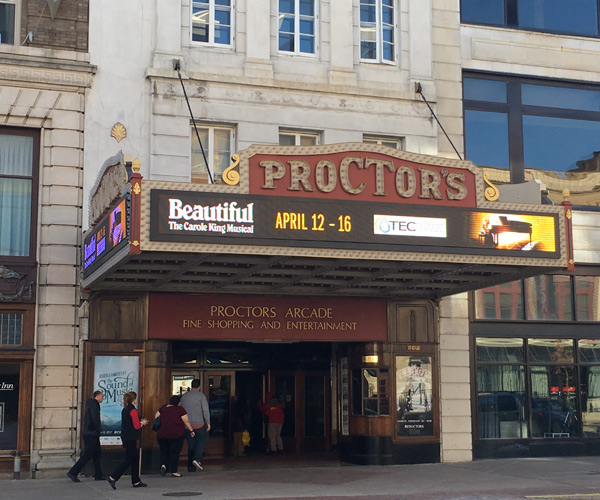
Proctor’s Theatre

432 State Street, Schenectady

346.6204; www.proctors.org

March 1& 2
Dirty Rotten Scoundrels - $65. 8pm. March 2 2pm.

March 7& 8
Love, Janis - $35, $30, $25, $20 (Cloud Club), 17 & under price available excluding Cloud Club. 8pm.

March 9
Family Series - Madeline and the Bad Hat - $8. 2pm.

March 10
School Days—Madeline and the Bad Hat - Group child/adult: $5/$6; individual child/adult: $7/$8. 10am; 12:15pm.

March 12
Tosca—$50, $42, $32, $20 (Cloud Club balcony seating), 17 & under price available excluding Cloud Club. 8pm.

March 13
k.d. lang—$55, $45, $30, $20 (Cloud Club Balcony seating only). 8pm.

March 14
Leahy—$32, $28, $24, $20 (Cloud Club balcony seating), 17 & under price available excluding Cloud Club. 8pm.

March 15
St. Petersburg Ballet Theatre: Giselle—$40, $35, $30, $20 (Cloud Club balcony seating), 17 & under price available excluding Cloud Club. 8pm.

March 16
Blast!—$40, $35, $30, $20 (Cloud Club balcony seating), 17 & under price available excluding Cloud Club. 4pm.

March 18
MVP GOLD Organ Concert Series —Free. 12pm.

March 25
School Days- Stories that Dance—Group child/adult: $5/$6; individual child/adult: $7/$8. 10am.

March 25
Family Series—Stories that Dance—$8. 7pm.

March 29
Sixties Spectacular—$49.75, $34.75. 7:30pm.

March 30
The Spencers: Theatre of Illusion—$35, $28, $24, $20 (Cloud Club balcony seating), 17 & under price available excluding Cloud Club. 2pm.

April 3
One Night of Queen performed by Gary Mullen and The Works—$39, $34, $28. 8pm.

April 8-10
Jesus Christ Superstar—$55, $45, $35, $20 (Cloud Club balcony seating), 17 & under price available excluding Cloud Club. 8pm.

April 12
The Swingle Sisters - $35, $30, $25, $20 (Cloud Club balcony seating), 17 & under price available excluding Cloud Club. 8pm.

April 13
The Schenectady Symphony Orchestra—America the Beautiful – Adults $7.50; children 8-18 $5; children 8 and under free. 3pm.

April 18-19
Ring of Fire: The Music of Johnny Cash—$45, $40, $27, $20 (Cloud Club balcony seating), 17 & under price available excluding Cloud Club. 8pm. April 19 2pm; 8pm.

April 25
School Days- Beakman Live!—Group child/adult: $5/$6; individual child/adult: $7/$8. 10am; 12:15pm.

April 26
Family Series—Beakman Live! - $8. 10am.

April 26
Barrage—$35, $30, $25, $20 (Cloud Club balcony seating), 17 & under price available excluding Cloud Club. 8pm.

April 29
MVP GOLD Organ Concert Series—Free. 12pm.

April 30
School Days—My Heart in a Suitcase - Group child/adult: $5/$6; individual child/adult: $7/$8. 10am; 12:15pm.

May 2
School Days—Hot Peas ‘n Butter - Group child/adult: $5/$6; individual child/adult: $7/$8. 10am.

May 2
Family Series—Hot Peas ‘n Butter. $8. 7pm.

May 3
LAF Italiano—$35, $30, $26, $20 (Cloud Club balcony seating). 8pm.

May 8
Wait Wait…Don’t Tell Me!—$33, $30, $27, $20 (Cloud Club balcony seating). 8pm.

May 10
From the Horse’s Mouth—$19, $16, $12. 6pm.

May 13-18
Movin’ Out—$60, $55, $40, $20 (Cloud Club balcony seating). 8pm. May 14 8pm; May 15 2pm, 8pm; May 16 8pm; May 17 2pm, 8pm; May 18 2pm.

Troy Savings Bank Music Hall

Second & State Street, Troy

273.0038; www.troymusichall.org


March 2
High School Choral Festival—3pm.

March 5
Troy Chromatic Concerts: Czech Philoharmonic— 8pm. $50-$55.

March 8
ESYO-Spring Concert—8pm. Adults $15; children & seniors $10.

March 11
Judy Handler & Mark Levesque—World music for guitar & mandolin. 12pm. Free.

March 14
Albany Symphony Orchestra: Key’s American Music Festival—8pm. $23; $37.50; $46.

March 16
Yundi Li—7pm. $32; $35.

March 21
Harvard Glee Club—8pm. $40 Patron tickets which includes admission to a pre-concert reception at the Rensselaer Co. Historical Society at 6:30pm; adults $25; children & students $15.

April 5
Albany Pro Musica—Brahm’s Requiem. 8pm.

April 6
David Grisman & John Sebastian—7pm. $29; $32.

April 8
Brian Patneaude Quartet—12pm. Free.

April 9
Troy Chromatic Concerts: Europa Galante—8pm. $40; $45.

April 12
Leo Kottke—8pm. $26; $29.

April 17
Ricky Skaggs & Bruce Hornsby—8pm. $42; $48.

April 19
Kevin Locke Native Dance Ensemble—7pm. $15; $26; $29.

April 26
RPI Spring Concert—11:30am; 4:30pm. Free.

April 27
Saratoga Springs Youth Orchestra—3pm.

May 13
Findlay Cockrell & the Parnas Duo—12pm. Free.

New York State Theatre Institute

Schacht Fine Arts Center, Russell Sage College, Troy

274.3256; www.nysti.org

March 7-19
“1776”—Tony Award-winning musical about the not-so-inevitable creation of the Declaration of Independence. Recommended for ages 11 and older. Adults $20; students and seniors $16; children $10. Monday-Friday 10am; Friday-Saturday 8pm; Sunday 2pm.

April 18-May 2
“Anastasia”—Was she or wasn’t she the Russian Princess Anastasia? Mystery always keeps us guessing. Recommended for ages 11 and older. Adults $20; students and seniors $16; children $10. Monday-Friday 10am; Friday-Saturday 8pm; Sunday 2pm.

May 16-June 8
“Who is Pippi Longstocking?”—Pippi Longstocking stands courageously for fairness, justice and the joy of youth, and is unequivocally the strongest girl in the world. But, where did she come from? Recommended for ages 6 and older. Adults $20; students and seniors $16; children $10. Monday-Friday 10am; Friday-Saturday 8pm; Sunday 2pm.

Ghent Playhouse

Off Route 66, Ghent

392.6264; www.ghentplayhouse.org

March 28- April 6
“Six Women with Brain Death or Expiring Minds Want to Know”—Musical satire of the skewed tabloid world through eyes of six whacked-out women on the edge. $25; $20; other options. Friday and Saturday 8pm; Sunday 2pm.

May 23-June 8
“Dedication or the Stuff of Dreams”—This play is the witty, comedic writer Terrance McNally’s bittersweet valentine to the theatre, showing how it has the power to change lives on both sides of the footlights. It deals with the clash of the fantasy world of the theatre and the sometimes harsher realities of life. $25; $20; other options. Friday and Saturday 8pm; Sunday 2pm.

Capital Repertory Theatre

111 North Pearl Street, Albany

Box Office: 445.7469

Business Office: 462.4531

February 29-March 23
The Taming of the Shrew—This rowdy fable of the course of true love features the finest of Shakespeare’s ingenious plot twists, sparkling wit and dazzling word play.

April 18-May 11
Hank Williams Lost Highway—The production is jam-packed with classic country and pop hits including Your Cheatin’ Heart, I’m So Lonesome I Could Cry, Jambalaya, Hey Good Lookin, and his gospel masterpiece I Saw the Light.

June 6-29
Doubt—A riveting exploration of suspicion and paranoia in the Catholic Church.

Colonial Little Theatre, Inc.

One Colonial Court, Johnstown

762.4325; www.coloniallittletheatre.org

May 2-4, 9-11
The Odd Couple (Female Version) – Written by Neil Simon. Directed by John Birchler. Friday and Saturday 8pm; Sunday 2pm.

Curtain Call Theatre

210 Old Loudon Road, Latham

877.7529; www.curtaincalltheatre.com

February 22-March 22
Looking for Normal – By Jane Anderson.

April 4-May10
Around the World in 80 Days – Adapted by Mark Brown from the Jules Verne novel.

May 30-June 28
Leading Ladies – By Ken Ludwing.

Old Songs, Inc.

37 South Main Street, Voorheesville

765.2815; www.oldsongs.org


March 21
Patrick Ball – Celtic Harp and story. 8pm. $17; ages 12 and under $5.

April 12
Peggy Seeger & Anne Hills – 8pm. $17; ages 12 and under $5.

April 17
Väsen – Traditional Swedish music with a modern attitude. 8pm. $20; ages 12 and under $5.

May 10
Mother-Daughter Stringband—A very special Mother’s Day weekend with a quartet featuring Lyn Hardy & Abby Newton and their daughters Ruth Ungar, Merenda & Rosie Newton. Fiddles, cello, guitar, and lots of great singing on an old and new folk repertoire. 8pm. $20 adults; $5 ages 12 and under.

Home Made Theater

Saratoga Spa State Park, Saratoga Springs

587.4427; www.homemadetheater.org


April 18, 19, 25, 26, 27, May 2-4
How to Succeed in Business Without Really Trying—Don’t miss this triumphant Broadway musical in which the play’s hero, J. Pierpont Finch, wrangles his way to the top of the corporate heap. Meet a marvelous array of corporate climbers, from saucy secretaries to brassy bosses, eager to scale the corporate ladder. In the end J.P. Finch trumps them all. April 18-26 and May 2-3 8:15pm; April 27 and May 4 2pm. $25; $22.

The Performing Arts Center at the University at Albany

1400 Washington Avenue, Albany

442.3997; www.albany.edu/pac

March 7
Clogs – 7pm. Free. Recital Hall.

March 7-9, 11-15
Picasso at the Lapine Agile—March 7 & 8, 12-14 8pm; March 9 & 15 2pm; March 11 10am. $12; $8 students, seniors and staff; March 11 $5 per student for high school student groups. Main Theatre.

March 16
University Symphony Orchestra—7pm. $6; $3 students. Main Theatre.

March 17
Festival of Contemporary Music—8pm. $6; $3 students. Main Theatre.

March 19
University Concert Band and Jazz Ensemble— 7:30pm. $6; $3 students. Main Theatre.

April 3
Capital Trio—7:30pm. $8; $4 students. Recital Hall.

April 4
LEMUR— 7pm. Free. Recital Hall.

April 6
Music of Weather Report—3pm. $8; $4 students. Recital Hall.

April 17
Music for Solo Piano—8pm. $8; $4 students. Recital Hall.

April 25, 26, 29, 30, May 1-3
Shakespeare’s Power Plays – April 25 & 30, May 1 & 2 8pm; April 26 2pm & 8pm; April 29 10am May 3 2pm. $12; $8 students, seniors and staff. April 29 $5 per student for high school student groups. Arena Theatre.

April 27
Spring Choral Concert—7:30pm. $8; $4 students. Main Theatre.

May 4
University Symphony Orchestra—7pm. $6; $3 students. Main Theatre.

May 5
University Concert Band and Percussion Ensemble—7:30pm. $6; $3 students. Main Theatre.

Union College

807 Union Street, Schenectady

388.6118; www.union.edu

March 1-3
Film “Michael Clayton”—7pm & 10pm. Free. Reamer Auditorium.

March 1
Musicians of Ma’alwyck “Moonstruck”—8pm-10pm. $20 general admission; $10 Seniors; free with Union College ID. Fred L. Emerson Foundation Auditorium of the Taylor Music Center.

March 5
Comedian DC Benny—10pm-11pm. Free. Old Chapel.

March 7-10
Film “No Country for Old Men”—7pm & 10pm. Free. Reamer Auditorium.

March 11
Union College Madrigal Singers—5pm-7pm. Free. Memorial Chapel.

March 12
Union College Jazz Ensemble—8pm-10pm. Free. Fred L. Emerson Foundation Auditorium of the Taylor Music Center.

March 14-17
Film “I am Legend”—8pm & 10pm. Free. Reamer Auditorium.

April 15 & 16
Chamber Concert Series—8pm-10pm. Memorial Chapel.

Albany Civic Theater

235 Second Avenue, Albany

462.1297; www.albanycivictheater.org


March 1 & 2, 6-9
“Hay Fever”—This play epitomizes the sophisticated wit of the era between the two World Wars. It is a comedy of manners about a family whose theatrical excesses torment a group of unsuspecting visitors.

May 2-4, 8-11, 15-18
“Inherit the Wind”—A classic courtroom drama that pits against each other, two opposing and powerful beliefs, academic freedom and religious fundamentalism.

March 24 & 25
Frumpled Fairy Tales—Adapted from the play by Bill Springer. March 24 2pm & 7pm; March 25 2pm. Free admission. For reservations or info: 312.6883.

Schenectady Light Opera Company

826 State Street, Schenectady

877.350.7378; www.sloctheater.org


March 7-9, 13-16
“Bat Boy, the Musical”—This off-Broadway hit begins with the discovery of the half bat/half boy in a cave in a West Virginian town. The wild, uncivilized creature is spared death, educated
and assimilated into society. Thursday-Saturdays 8pm; Sundays 2pm. $20; under 13 $10.

May 2-4, 8-11
“Anything Goes”—When you mix a love-struck stowaway, a nightclub singer, a priest, a millionaire, a proper Brit, and some gangsters, Anything Goes! This comic romp aboard the S.S. American is filled with mistaken identity, toe tapping ditties, and show stopping numbers. Tickets on sale March 15. $20; under 13 $10.

Cohoes Music Hall

58 Remsen Street, Cohoes

237.5858; www.cohoesmusichall.com


March 29
42nd Street—2pm. $30 for Friends of the Pruyn House Members; $35 non-members. For more info or to RSVP: 783.1435.

Sand Lake Center for the Arts

Home of Circle Theatre Players

2880 Route 43, Averill Park

674.2008; www.slca-ctp.org


Exhibits

Through March 31
Paintings by Carolyn Abrams—Watercolors, collage and mixed media. Her work represents a record of places visited, objects studied and ideas that are generated from feelings, experiences or imagination.

April 1-May 15
Paintings by Carol Bonaviticola

May 16-June 20
Averill Park Central School District Art Faculty Show —The K-12 Art Department shows off the work of nine teaching artists who work in a variety of media and styles.

Circle Theatre Players
March 28-30, April 4-6
The Foreigner—Side splitting comic situations, moments of tension and suspense, and a stage full of interesting characters. A play to be enjoyed by teens on up as the good guys emerge triumphant. $15. March 28-29, April 4-5 8pm; March 30, April 5-6 2:30pm.

May 30-June 1, June 6-8
Meet Me in St. Louis – St. Louis meets Averill Park in a festival of song, fireworks, humor and romance. $18. May 30-31, June 6-7 8pm; June 1 & 8 2:30pm.

Albany Jewish Community Center

340 Whitehall Road, Albany, 432.6351


March 1-2, 8-9, 15-16
“The Diary of Anne Frank” - $12; seniors and students $10.

Albany County Convention & Visitors Bureau

25 Quackenbush Square, Albany, 434.1217; www.albany.org


Exhibits

Through March 27
Art of the Quilt- From Traditional to Contemporary—Features more than 50 piecesof handiwork by local artisans that depict the evolution of the quilt from functional craft to cutting-edgefabric art. Monday-Friday 9am-4pm; Saturday-Sunday 10am- 4pm.

April 4- June 20
Photographic Intimacy: Exhibit by James Warren Cowman—More than 30 black and white images taken of people living everyday life in the Capital District as well as Maine, Boston, NYC and Northampton. The images span from 1996-2008. Monday-Friday 9am-4pm; Saturday-Sunday 10am-4pm.

Henry Hudson Planetarium

434.0405


March 8
Family Star Show—Interactive program geared to pre-school and elementary aged children exploring the stars, planets, comets and constellations in the night sky. $3. 11am.

March
Star Sighting—Interactive program identifies stars, planets, comets and constellations in the night sky and the tools and techniques for becoming a sky-watcher. $3. 1pm.

April 12
Family Star Show—Interactive program geared to pre-school and elementary aged children exploring the stars, planets, comets and constellations in the night sky. $3. 11am.

April 12
Star Sighting—Interactive program identifies stars, planets, comets and constellations in the night sky and the tools and techniques for becoming a sky-watcher. $3. 1pm.

April 15
School Break Week at the Henry Hudson Planetarium—Zoo in the Sky Interactive planetarium program geared to pre-school and elementary-aged children exploring the animals of the earth and animals of the night sky, including puppetry and storytelling. Suitable for children pre-K-3. $3. 1pm.

April 17
School Break at the Henry Hudson Planetarium—“Stargazing–What’s Up In The Sky Tonight?” Learn the basics of viewing the night sky including an introduction to the tools and techniques needed to identify stars, planets and constellations. 2nd grade and up. $3. 1pm.

May 10
Family Star Show—Interactive program geared to pre-school and elementary aged children exploring the stars, planets, comets and constellations in the night sky. $3. 11am.

May 10
Star Sighting—Interactive program identifies stars, planets, comets and constellations in the night sky and the tools and techniques for becoming a sky-watcher. $3. 1pm.

June 14
Family Star Show—Interactive program geared to pre-school and elementary aged children exploring the stars, planets, comets and constellations in the night sky. $3. 11am.

June 14
Star Sighting—Interactive program identifies stars, planets, comets and constellations in the night sky and the tools and techniques for becoming a sky-watcher. $3. 1pm.

Pets

user-pic
Vote 0 Votes Saratoga News & Events

Pet Q & A with Dr. David A. Wolfe

Shaker Veterinary Hospital, Latham

By Ciara McCann

Q: Are there any seasonal health issues to be watchful for with pets?
A: In the winter, certainly frostbite and hypothermia are the big things to watch for. Sometimes if your animal goes out and its feet are wet, they could freeze right to the ground. You don’t want to keep them outside in extreme temperatures for very long, and also because of the cold, animals need to eat more to build energy for heat production.
As it becomes warmer and we move into spring, you have to worry about mosquitoes and ticks. Using heartworm preventative treatments and topical medicines can help your pet stay healthy.

Q: What are some warning signs to look for in your pet to see if they are sick and should be taken to the vet?
A: In general, watch their attitude. If your pet vomits and a minute later is back eating, they are probably fine. However, if they vomit and then look depressed and won’t eat, then you have a problem. Be on the look out for any changes in their demeanor. If they aren’t acting like they normally do, you should get them checked out.
Q: What are some dangers in the household that can endanger your pet?
A: In the spring, antifreeze is a big danger to pets. For some reason, they like the taste of the ethylene glycol and will start licking it if there is a puddle in the driveway. It doesn’t take much to be fatal to your pets. You should bring them in to the vet right away if you suspect this happening.
Getting into the garbage is also a big problem for pets. If they consume rotting products it could cause gastroenteritis.

Q: How can you protect yourself from catching a disease or illness from your pet?
A: Primary, basic cleanliness is a main way to avoid catching something from your pet. Getting them the proper vaccinations and training them not to bite early on can prevent you from getting infections.
Always wash your hands right away after coming in contact with your pet’s waste products. Also, I never let my dogs lick my mouth. Dogs have a habit of licking their own behinds, which can lead to the transportation of intestinal parasites. Licking you anywhere else can be okay, but not on the lips.

Q: Are there any certain breeds of dogs or cats that seem to have a lot of health problems?
A: Different breeds have different problems. For example, Persian cats are known to have liver and kidney diseases, toy breeds have problems with their kneecaps and Scottish Terriers are prone to mandible diseases. If you are thinking about getting a pet, do your research and find out about any congenial or inherited diseases.

Q: How often should pets get a check up with their vet?
A: For young animals and puppies, at least two to three times a year. As your pet gets older, like eight or nine years old, twice a year is enough. Lately, we’ve been conducting wellness exams, workups and blood tests for pets that come in; it’s like a human getting a physical. It’s good to do this periodically to pick up on anything disastrous before it becomes life-threatening.

Q: Do you have any tips for new puppy owners?
A: Well, the most common cause of death in young dogs is behavioral issues. You need to start training them early, and if you are having trouble, get help. If they tend to bite when they young and you don’t correct it, they will become more of a significant liability than an asset.
The first thing you should teach them is to come, and the second thing is the word “no.” Make it pleasurable for them when they do respond to your call so they will want to do it more often. If you teach them this early, they will come back when you call them if they ever start to run into the road.

Q: Housebreaking a new pet can be difficult, any advice or tips?
A: I like to teach cage training. Right after a young puppy eats, take them outside. If they don’t go, put them in their cage and take them out a half hour later. Continue until they do go.
During the night you should keep them in their cage and take them out once during the night and first thing in the morning. After they are five or six months old they will be able to hold it longer.

Q: How would you recommend preventing your pet from becoming obese?
A: The biggest problem with pets right now is obesity, and it’s more of a human issue. Most dogs just want attention, so we shouldn’t praise them with food. Instead of rewarding them with a treat, play with them instead.
Don’t give them a key to the refrigerator. We tend to want to give them food because we think it makes them happy, but we don’t need to teach them they need an oral gratification. Some dogs will eat just to please their owner when they aren’t really hungry.
My advice is to give them regular dry food and not to mix in any wet, canned food to make it taste better. You can give them the occasional treat, but we shouldn’t over feed our pets.

Q: What are some things to keep in mind when traveling with your pet?
A: Especially in the spring and summer months you have to be watchful for heatstroke. If you must leave your pet in the car, leaving the windows open might not be enough. Leave the air conditioner on or park the car in the shade.
Another thing, which a lot of pet owners are doing lately is microchipping their animals. The process is simple and relatively inexpensive. A tiny microchip that fits in a needle is injected into the area above the shoulder blades that corresponds with contact information that is given to the American Kennel Club. If your pet ever gets lost this greatly increases the chance of reuniting with them.

Q: What are some things to keep in mind when choosing the right pet for you and your family?
A: Aside from researching possible diseases, the most important thing to consider is personality. Not all dogs are meant to be around young children; in fact some can be quite aggressive. You have to look at the breeds and what they were originally meant for.
For elderly people, small dogs are a better choice. They are easier to lift up and take to the vet than a Saint Bernard would be.
Also, if possible, try and look at the mother and father of the pet you want. This way you can get an idea of what their personalities will be like. If the parents want to eat you alive, chances are their offspring will too. On the other hand, if they seem laidback and like to be around people, you might be better off picking one from this litter.

Good for you, good for your dog!

Family Features
The expression “It’s a dog’s life” certainly holds true for the millions of four-legged friends who are now enjoying some of life’s best little plea­sures, a privilege their owners have appreciated for years. In fact, more than 75 percent of pet owners consider their dogs to be members of the family, according to the American Pet Products Manufacturers Association 2005 to 2006 National Pet Owners Survey. This means America’s canine companions are now enjoying creature comforts that include sleeping in bed with their owners, traveling on vacations and meeting with their doggie pals for organized play dates. In addition, recent trends in pet ownership are changing the way dogs eat, with the emergence of dog food that is inspired by entrees more commonly found on the dinner table.

Feed your dog like part of the family
More and more dog owners want to feed their dogs like they feed themselves — choosing foods made with gourmet flavors and real, wholesome ingredients that offer a balance of high-quality nutrition and great taste. According to a Purina survey of 1,000 adult pet owners living in the U.S.*, 91 percent rank high-quality protein as the most important nutrient to consider when purchasing food for their dogs and cats. This is followed closely by 90 percent who say they want to serve their pets foods rich in antioxidants. Mealtime has never been more exciting for man’s best friend as dog owners place great emphasis on the quality of the food going into their dogs’ bowls.

“Over the past several years, we have seen the emergence of a growing food trend that we call ‘affordable indulgence,’ ” said Lucien Vendome, executive chef for Nestlé. “Gourmet foods and flavors once considered upscale and limited only to fine-dining establishments are now appearing in mass channels such as grocery stores and even in commercial dog food.”
According to Vendome, “Four-legged friends can now enjoy a gourmet meal with the Filet Mignon, Prime Rib and New York Strip Flavors found in the ALPO® Chop House Originals® brand dog food line, which also includes products made with Angus beef.”

In addition to enjoying real meat flavors, dogs can also dine on food featuring unique ingredients in the form of wholesome fruits, vegetables and a wide selection of good-for-you grains. For example, some dog foods are now formu­lated with accents of antioxidant-rich cranberries and sweet potatoes. Others deliver excellent nutrition and great taste through whole grains like oatmeal and brown rice.
As more and more pet owners feed their four-legged friends like they feed them­selves, they are helping to ensure that mealtime is the highlight of every­-one’s day! For more information on the gourmet flavors found in ALPO brand dog food, visit www.alpo.com.

*Phone interviews were conducted of 1000 adults, ages 18 and over, living in the United States during a one-week period in April 2007. Most results have a margin of error of +/- 5% at the 95% confidence level for comparable data between the populations of pet owners.

Indulge your dog’s desires
Sometimes, dogs just want to be dogs, and it’s up to their owners to find creative ways for their canine companions to enjoy some dog-gone, good old-fashioned fun. It may require dog owners to go back to the basics, but it makes all the dif­ference in making their canine friends feel like a special part of the family. Dogs desire the simple things in life — daily exercise, delicious meaty meals and lots of bonding time with the humans they love most!

Fun
Dogs need a positive outlet for energy, and nothing helps them release it more than a walk around the block, a fun game of fetch or a trip to the dog park. Not only does exercise help dogs maintain a healthy weight and ideal body condi­tion, but it also helps keep them out of trouble and resting quietly at the end of the day. A walk provides dogs with a chance to enjoy the fresh air as well as check out all the great sights and smells of the neighborhood. For more active pups that prefer to run, a fun game of fetch with a tennis ball or
a flying disc is just the trick. And for social dogs who prefer the company of other dogs, a play date with a small group of their beloved canine companions can be the perfect activity for exercise and bonding.

Food
Now, for the highlight of a dog’s day — mealtime! Don’t forget that the deli­cious aromas and tastes of a gourmet meal can now be shared with the whole family, including the dog. Mealtime is a great time to remind dogs just how much they are loved each and everyday. So, while the family gathers around the table to enjoy a mouthwatering dinner, make sure the dog bellies up to his bowl to find an equally appetizing meal, such as one of the many tasty beef flavors of ALPO Chop House Originals brand dog food, which is made with Angus beef. As the old adage goes, a way to a loved one’s heart is through his stomach, and dogs are no exception.

Friendship
In addition to their daily walk and a great meaty meal, dogs like nothing better than some one-on-one bonding time with their owners. It only takes a belly rub and some snuggle time to get tails wagging. In fact, spending qual­ity time together can benefit the owner as much as it does the dog, and it may even result in fewer doctor visits for the owner, especially for non-serious medical conditions.

Dinner is served: Top Dog Food Trends

The humanization of pets trend is significantly impacting the dog food industry. As a result, owners are finding more specialized product offerings that allow them to feed their dogs like they feed themselves, choosing food that is inspired by selections more commonly found on the dinner table.

Here are some of the hottest trends changing the way America’s dogs are eating:

Natural/Organic
As more people are embracing a healthy lifestyle and eating organic and natural foods, they are also choosing natural foods for their pets. Industry research shows that natural/organic pet food is expected to grow at more than three times the rate of total pet food through 2007 (Packaged Facts, Market Trends: Natural Pet Products, February 2005). Among the ingredients included in natural pet food are whole grains such as oatmeal and brown rice and accents of antioxidant-rich fruits and vegetables like cranberries and sweet potatoes.

Gourmet Flavors
“Only the best” has long been the standard for fine-dining establishments that cater to people who desire a high-quality, gourmet meal. Now dogs can also enjoy the fine tastes in life with dog food products like ALPO Chop House Originals brand dog food that features restaurant-inspired flavors including Filet Mignon Flavor, Top Sirloin Flavor and Ribeye Flavor made with Angus beef.

Healthy Enhancements
Dog owners are taking an active role in not only trying to promote their own health, but also the health of their canine companions. For example, dog food is now available with specialized ingredients that support healthy joints, an important benefit for large breed dogs. In addition, omega fatty acids are now added to
some pet foods to help promote a healthy skin and coat (Pet Foods Get Functional, “Functional Ingredients Magazine,” July 2006, pages 10 to 15). Advanced veterinary formulas are also available for purchase through veterinarians for pets with certain health conditions.

Convenience-Oriented
In this time-starved society, people are continuously looking for products that help them get things done faster and easier, so they can enjoy more time with their families. Convenience is also finding its way to the dog food bowl, with dog food products that are now available in special user-friendly packaging that helps make feeding time even more enjoyable. For instance, certain dog food products come in cans with easy open lids, which eliminate the need for a can opener. Other dog food products come in re-usable plastic containers that make it possible for the owner to save the unused portion in the refrigerator until their dog’s next meal.

Travel Notes

user-pic
Vote 0 Votes Saratoga News & Events

Travel notes: Orchards Hotel, Williamstown, MA

By Mary Beth Galarneau

About 10 years ago, my venture up Mount Greylock in Williamstown afforded me a view of the town, but denied me an indulgence in its quainter details. When I got the chance to make a second visit, I vowed not to make the same mistake again.

As I discovered then, sometimes the best getaway is right in your own backyard. Just a 50-minute jaunt from the Capital Region, Williamstown is not only a traditional summer haven for tourists, but it is also a cultural mecca that can be enjoyed all year long. My husband and I recently confirmed that first hand, celebrating our trip as our “cultural weekend”, and rightly so: in just one day, we toured three museums offering everything from French Impressionist paintings to the latest in modern art.While it is true that Williams College is the big draw of this small town, Williamstown is not your typical college town. Home to a world-class museum in The Sterling and Francine Clark Art Institute, as well as the Williams College Museum of Art, Williamstown is also within four miles of Mass MoCA in nearby North Adams. Given their proximity to one another, my husband and I decided to hopscotch to each museum during a mid–winter’s day.

We started at The Clark on a snowy Saturday morning. Moving at our own pace, we took our time in each gallery, carefully studying the extraordinary works of art. Renowned for its French Impressionist paintings by Claude Monet, Edgar Degas, Camille Pissarro and Pierre-Auguste Renoir, there is also a collection of American paintings by Winslow Homer, John Singer Sargent, Frederic Remington and Mary Cassatt.

We missed the Remington Looking West exhibit, which opened the week after we visited. It runs through May 4 and brings together works from public and private collections, including those Remington created to establish his reputation as a serious artist, his sculpture and his later nocturnes.

While admiring these wondrous works of art, you feel as if you’re in the middle of a busy cosmopolitan city. It’s only when you steal a glance at the surrounding acres of woodlands that you realize you have stumbled upon a jewel in the countryside.

Following our lengthy stay at the museum, which included the obligatory purchase at the gift shop, we proceeded to Mass MoCA, just a short drive down Rt. 2 in nearby North Adams. The change in scenery could not have been more dramatic. Where the Clark was serene and frequented by a more hushed crowd, Mass MoCA was the complete opposite. Perhaps it was because it was “free admission” day, or maybe it was because of the interesting art featured on the museum walls, but the scene here was one of chaotic ebullience. There were school kids scurrying about, as if energized by the curious works of art. I was completely amazed by the abstract works, including one gallery that was framed by 100 images of pink dots purporting to approximate the exact shade of pink of Jackie Kennedy’s pillbox hat. Another exhibit was a series of white box fans piled on top of each other, which goes to show you how art can transform the ordinary into the extraordinary simply by skewing the viewer’s perspective.

Leaving Mass MoCA in a serious snow squall, we returned to Williamstown where we toured the college’s impressive museum before retreating to the Orchards Hotel in the center of town for some much-needed relaxation.

Knowing tea time was offered in the living room in the late afternoon, I suggested we enjoy a warm drink and snack before dinner. Other guests had the same idea, so even though we couldn’t snag the coveted seat in front of the fireplace, we still enjoyed being off our feet and watching the snow.

The hotel, built in 1985, is situated on property that was originally part of a 240-acre farm founded in 1765 by Nehemiah Semdley, one of Williamstown’s earliest settlers. Here, he planted the first orchard at what was called Homestead Farm.

When the hotel was built, ornamental apple trees were kept in the courtyard garden as a reminder of its past. The ever-present basket of apples in the living room serves the same purpose.
Having once owned a bed and breakfast in the Poconos, General Manager Scott Frankel brings a B&B philosophy to the operation of the 49-room hotel.

“We’re here for the guest,” said Frankel, explaining that everyone from the concierge to the dishwasher is considered an innkeeper in the hotel, that way “guests never have to look for who’s in charge.”
Frankel practices what he preaches. Numerous times during our weekend stay I noticed him chatting with guests in the living room, greeting guests and offering to help with bags. He even helped seat people for dinner.

Something fun to do while walking the halls is to check out the room names. In keeping with the town’s namesake, all of the rooms are named after famous Williamses. Our room, for instance, was the Andy Williams room. If it’s a suite you want, then book the Tennessee Williams room, which features a king bed, Jacuzzi tub, fireplace, separate marble shower with five shower heads, and a fabulous view.

Our comfortable room was handsomely decorated with a mix of dark wood and floral and striped patterns on the wall and bed. Arriving guests are treated to a plate of cookies that serves to recall the comfort of home without detracting from the elegance of the hotel.

While traveling, I love checking out the onsite restaurant. It’s a luxury to be able to saunter to the dining room without having to worry about braving the elements. Settling in for a delicious meal was truly a great ending to our day.

Similar to the décor in our room, the dining room was elegant, but intimate. Our table was near the courtyard, which was illuminated by white lights spangled across the trees. It’s easy to imagine how lively it must look when it’s in full bloom during the warmer months.

My husband enjoyed the filet mignon, while I savored the mushroom risotto. Like the arts surrounding the area, the meal was truly a work of art, with a taste to satisfy any palette.
Relaxing by a fire after dinner in our room, I concluded that a visit to the Orchards is a wonderful accompaniment to a weekend of the arts. It’s not just a great place to unwind after a stimulating day of museum tours, but a place where you can throw up your feet at day’s end and be sure that they never have to touch the ground again. At least, that is, until Monday. But that’s what long weekends are for, right?

The Orchards Hotel is located at 222 Adams Road, Williamstown, MA. For more information call 413.458.9611 or visit www.orchardshotel.com. Rates range between $99-$259 during off season and $229-$389 during peak season.


Careers

user-pic
Vote 0 Votes Saratoga News & Events

Considering relocating?

By Dan Moran

If you’re like me, then the recent onslaught of wintry misery has ushered in the predictable slew of emails from friends puzzling over our refusal to join them in warmer climes. If that’s the case, then this is probably the best time to discuss relocation.

People are considering relocation … where are they going?
Survey results published by Careerbuilder.com state that 59% of job seekers would relocate to a new city for a new job, while 44% would relocate to a new region or state. In addition, there is a growing group who just want a better quality of life, working environment and, of course, climate. They are flocking to warmer locales and new regions known for happier qualities of living.
According to another survey by Realty Times, the hottest relocation destinations are:
• Washington, D.C.
• Jupiter, FL
• Atlanta, GA
• Chicago,Il
• Dallas, TX
• Raleigh, NC
• Charlotte, NC
• Houston, TX
• Tampa, FL
• New York, NY
The survey continues with the hottest suburban regions. The suburban markets include:
• Fairfax, VA
• Longwood, FL
• Parsippany, NJ
• Bothell, WA
• Overland Park, KS
There has been little change in this list over the past few years, with an unmistakable concentration in warmer climates. As one can imagine, most of us from up north flock south.

Will companies relocate you?
The number of companies willing to pay relocation costs is down significantly. This is generally reserved for either the most senior executive positions or for positions of high demand (healthcare and information technology, to name a few) in larger companies. Smaller and mid-sized companies rarely defray the costs of relocation.
So, if you want to move to Jupiter, Fl, you should meet with your financial planner to map out a strategy, do a careful estimate of your moving costs and plan to finance the move on your own.

Ready to go?
How do you look for a new job in another area when you are in the Capital Region?
Thanks to new job search technology, this is much easier than before, but you must be careful in what you do and how you approach employers.

Do your research—As I mentioned, take the time necessary to get to know your new target area: the neighborhoods, traffic patterns and companies that are in the area. You will learn about “reverse commuting”, the good places to live (and not), what others think about an area or community, etc. Get to know where the high growth areas are and look at apartment and real-estate ads so you know what expenses you are facing. Some years back, my wife and I moved to Boston for a career opportunity. We didn’t do the research we should have and ended up in a community without “personality” that was very removed from downtown Boston, which we loved. Two years later, we were back in the Capital Region (and we love it here).
It is important to supplement your research with a visit—and this should not be one day in and out. Spend a few days driving the area, visiting businesses and experiencing first-hand how those who live there exist. Get as much information as you can utilizing the web for research and your own direct contacts. A great resource is Sperling’s www.bestplaces.net for all types of community information. It is critical to make an informed decision on something this significant in your life (and that of your family). I have met clients who, without doing research, followed friends and family to a new area, only to find out later that they didn’t fit in or like where they were.
Do plan – carefully – Planning to move to a new area requires a budget, timeline schedule and contingency plan. Secure moving company quotes (if you do not plan to do this on your own – quite possibly with PODS and other you-pack services), housing costs and other related expenses. If you do plan to move first and then find a job (which some people do or are forced to do), develop a contingency budget of what you will need to get by before you get your first paycheck (at least three month’s is recommended).
Do establish a “home” address if possible – Perhaps you can use a friend or family member’s address to establish the appearance of being in the area. Unfortunately, many employers will just trash your resume or not even look at your job posting if you have a long distance address. Use your cell phone number and email address for direct contact in this situation.
Cleary communicate your intention of relocating in the first line of your resume and letter. Do the same in any resume posting site you plan to use, right in the keyword line.
Do utilize the job boards—Monster.com, CareerBuilder.com, Hotjobs.com and others allow you to select a region you have an interest in, as well as the type of job you want. Research the target area for other job board sites that could include:

• Colleges & universities
• Associations
• Chambers
• Fraternal organizations
Do network – Networking is still, by far, the most effective way to land a job. With social networking technology like LinkedIn, you can find friends, colleagues and others in the new target area that might be able to help you. If you’re a college graduate, find out where the alumni group is in your new target area and make contacts that way.
Relocating to a new area and conducting a long-distance job search certainly isn’t easy, but the rewards are many. Good luck—and please send me a postcard!

Dan Moran is president & founder of Next-Act, a career management & transition firm located in Colonie. He specializes in helping people make career choices and seek new jobs. He is also a Certified Facilitator for Get Hired Now! and Get Clients Now! Programs, which help those in career transition and companies get results. He mentors managers & executives as they navigate their careers and achievements. You can reach him at 641.8968 or dmoran@next-act.com or visit www.next-act.com.

Guy Stuff

user-pic
Vote 0 Votes Saratoga News & Events

Places I remember…
A region, a world of adventures

By Ed Lange

In my last column, I wrote about editing and converting old video tapes and photos to DVD. Having done this myself, the task took me on a journey through places and memories ranging from joyful to tragic to hilarious. Places I’d recommend to others and those from which you should “Run Away!” Here then, in absolutely meaningless order are places in the Capital Region and the world that made my list—for good or ill.

Labor Room/Delivery Room
When my wife Linda gave birth to our daughter Kate, I shared every minute of both places. The delivery room proved to be the most wonderful, life-changing place of my life. The labor room on the other hand—yikes!—not so much.

Germany
Unforgettable beer, delicious bread and wursts, beautiful scenery, extremely attractive young people, centuries of history (both very bad and very good), lively cities, hiking trails everywhere and even seaside beaches….I can’t understand why it isn’t a more popular tourist destination (except for the dollar versus the Euro, egad!)

My grandfather’s apothecary shop
Though gone now, it used to be at the corner of Dove and Lancaster Streets in Albany from about 1900. A magically scientific place where Granddad compounded prescriptions with a mortar and pestle, actually invented curatives and knew customers by name.

The Haunted House on Myrtle
All right, it probably wasn’t really haunted but it sure looked like it, besides, every kid should grow up near a place that he thinks of as haunted.

Stonehenge
The place in southern England that probably really is haunted. But whether it is or not, one cannot stand in that field in the presence of those stones and not experience astonishment and wonder.

Petra in Jordan
The “rose red city” literally carved out of enormous cliffs of stone. So mind-boggling that it even appears in an Indiana Jones movie. You gaze in awe that somehow ancient people carved these soaring buildings in the desert – with hand tools!

Any Flat, Wide Open Space
Working diligently and precisely with X-acto knives, my brothers and I built large balsa model airplanes and mounted miniature gas engines on them. With a couple of wires connected to the planes’ control surfaces, we flew them in circles with loops, climbs, dives, wingovers… and heartbreaking, balsa-breaking crashes.

The Meadowlands
This year, Linda and I went to our first NFL game to watch the mighty Pittsburgh Steelers decimate the lowly NY Jets. Except the doggone Steelers lost.

My High School Wrestling Mat
On the varsity team as a sophomore, I faced the Section II champion in my weight class. He pinned me in 34 humiliating seconds using something called a “Figure Four Grapevine”, a hold I had never seen. While my girlfriend watched!

The Atlantic Ocean at Midnight
During one 200-mile, non-stop sailboat race around Long Island we were struck by a ferocious thunderstorm. The winds and seas both howled with a vengeance, but the lightning cracking apart the black night had us thinking of our mast as an overly attractive lightning rod.

The NYS Thruway in Winter
Returning from a late night date with a couple of girls in NYC, my buddy’s Opel broke down in the bitter cold, stranding us with nothing to sustain us but Clorets and little Tiparillo cigars. This pre–dated cell phones, of course.

P.S. #4
Sadly, it fell down and has been replaced by a playground at the corner of Madison and Ontario Streets in Albany. But it was a great elementary school – except for the time my mother thought it would be good to dress me as a girl for Halloween.

Dudley Observatory
Another classic landmark erased from Albany. Once located where the CDPC now stands, this brick building covered in ivy was a real honest-to-gosh observatory with a dome telescope to look through. It was also home to the best sledding hill in town.

Thacher Park/Indian Ladder Trail
If you’ve never been, go. The best “scenic overlook” in the Capital Region, and where my family would bundle into our Nash Rambler and meet aunts, uncles and cousins for great picnics. And where we still go, decades later.

Penn State
While grad students more than 30 years ago, Linda and I attended every home football game of the Nittany Lions coached by the legendary educator Joe Paterno – who is still the head coach at age 81!

Onesquethaw Creek
A Helderberg heaven-on-earth for kids growing to adulthood. Waterfalls, a fabulous steep-walled gorge, cliffs to climb, secret rocky lairs and hidden paths, wildflowers, trout, and swimming holes to rival Huck Finn.

A Friend’s Farm: Pitching Hay/Riding heifers
Many farmers today use machines that wrap hay in plastic, which supplants the opportunity to muscle hay bales onto a wagon in the hot sun and get completely covered with dirt, sweat and little sticky bits of hay. As for riding heifers – I recommend horses instead.

NYC by Sailboat
It’s time-travelingly bizarre to voyage down the East River and through New York Harbor on a sailboat while cars and trucks zip by at 60 mph alongside you, and skyscrapers tower above your boat’s mast – little-changed from the days of Odysseus.

Sweden
A lovely, friendly country where I had the privilege of directing the play, Born Yesterday with NYSTI. An endearing place where some treated us like visiting royalty and our colleagues treated us like family. Stockholm may be one of the world’s most enchanting cities, and if the dollar improves against the krona, try to go there.

Lake Champlain by Canoe
Not recommended. Four teenage buddies and I set forth to canoe from Plattsburgh to Albany. After wet clothes and sleeping bags, noodles with strawberry jam, blistering sunburn, and internecine disagreements, we pulled out at Ticonderoga.

Winter Campout
Not recommended. Our Boy Scout troop pitched our canvas tents in the snow; our Scoutmaster taught us to use pine boughs under our sleeping bags for insulation.
And we shivered for two nights straight.

Climbing a Mountain in Winter
Which reminds me of the time a slew of us climbed the Adirondack’s Giant Mountain in the dead of winter. The climb began idyllically: clear, blue sky, moderate temperature, and enthusiastic spirits. By the time we reached the top, we were assaulted by a full blizzard complete with fierce, frigid winds and needle-sharp snow. Not recommended.

Petit Byahaut
At the opposite end of the climatological spectrum is one I should keep secret, but… In the southern Caribbean on the island of St. Vincent is a tiny bay. We sailed our chartered boat into that bay and discovered some of the most wonderful snorkeling ever. “Like snorkeling in an aquarium,” cried Linda. And on the shore of that bay is a very tiny resort of “luxury tents” and a tiny restaurant that prepares and delectably serves whatever fish they catch that day. Highly recommended, but accessible only by boat. If I ever forget this fantastic place, shoot me.

Vietnam
There are dozens of places of indelible memories, but the one that is etched most clearly is lying under my bunk in an evac hospital with a bullet wound while the hospital undergoes a vicious rocket and mortar attack during the Tet Offensive. The extraordinary courage of the nurses shines most unforgettably. With utter disregard for their own safety, those young women, most only in their early 20s, struggled to help us grunts get under our beds for protection. While deadly rockets and mortars exploded all around them, they lifted heavy GIs to relative safety beside sandbags. I will never ever forget their bravery.

Ed Lange is a bi-monthly contributor to CRL Magazine.

Fitness

user-pic
Vote 0 Votes Saratoga News & Events

What’s the deal with water?

By Judy Torel

“Drink a minimum of eight eight-ounce glasses of water a day for health and to avoid dehydration.”
You have heard and read this hundreds of times by now and if you are not slavishly trying to force yourself to consume this amount, then you are guilt-ridden for not being a good water drinker!
What does water do in your body? Is there a general rule for daily water consumption? And where did this guideline come from anyway?

What does water do in your body?
The average woman’s body is comprised of 45-60% water. The average man is 50-65%. Our lungs are composed of 90% water and our blood is 80%. Water serves as a solvent for nutrients and delivers nutrients to cells as well as helps eliminate waste products from the cells. Both the spaces between cells (intercellular spaces) and the spaces inside cells (intracellular spaces) are filled with water. Every metabolic process in your body is dependent on water.
There are several factors that influence how much water a body needs in a day:
Exercise: The more you exercise, the more water you need to replace what you lose in sweat and to maintain proper metabolic functions necessary to continue exercising.
Environment: A hot or humid climate, a dry heated dwelling in the winter and altitudes above 2,500 feet all place higher water demands on a human body.
Health: Vomiting, diarrhea and fever result in loss of water from the body. Various health conditions like bladder infections and urinary tract stones require higher consumption of water. Pregnancy and breastfeeding also place higher hydration needs on a woman’s body.
Every day a human body loses water through breathing, perspiration, urination and bowel movements. So, even the most sedentary person needs to replace water on a daily basis.

Where did the 8x8 recommendation originate?
This guideline originated from a statement issued by the Food and Nutrition Board of the National Research Council, which stated that one milliliter of water for each calorie of food is the recommended hydration formula. An average intake of 2,000 calories per day would result in a hydration intake of 2 liters or 64 ounces of water per day (8x8 ounces). However, the Board also stated that most of this water is contained in prepared foods, but that was omitted or missed, so the recommendation was interpreted as how much water to drink each day.
But there are other ways that humans get hydration on a daily basis. Many of the foods we eat are made up of at least 20% water, with fruits and vegetables containing up to 90% water!
Beverages such as beer, wine and caffeinated drinks such as coffee, tea and soda all contribute to hydration despite the popular misconception that they lead to dehydration. Current research shows that caffeinated beverages do not result in a lower hydration level partly because the caffeine is taken into the body in a liquid medium. Water is one of the best hydration replacements because it is calorie-free and readily available, but it is not the only source of hydration.

If you are an athlete who is exercising over 60 minutes at a time, an electrolyte replacement sports drink such as Gatorade 2 will not only replace hydration, but will also keep a proper balance of sodium, magnesium, calcium and potassium, otherwise known as the electrolytes.

Electrolytes are necessary for proper functioning of the body. They keep the heart pumping and nervous system operating. If an athlete over drinks water without replacing electrolytes, a condition called hyponatremia can result. This is when sodium levels become too distilled by too much water and it can result in death.
Recently the USATF (United States Track and Field Association) has revised its’ guidelines for hydration during running events. Before the recommendation was to drink before you are thirsty, the new recommendation is that you drink when thirsty during a race. The rule of thumb is to consume 4-12 ounces of liquid per 15 minutes of exercise. This amount varies depending on individual sweat rate, environmental conditions and conditioning.

Is there a general rule for daily hydration?
There are a couple of methods for determining hydration replacement for an average adult living in a temperate climate. The first is the replacement approach. Science has shown that the average urine output for an adult is 1.5 liters per day. We lose an additional liter through breathing, sweating and elimination. That means 2.5 liters a day needs to be replaced. We generally take in 20% of that amount from the foods we eat. That leaves about 70 ounces to be replaced by what we drink. So 8x8 ounces is not that far off.
The second approach is the dietary replacement approach. The Institute of Medicine recommends that men consume 3 liters (about 96 ounces) and women consume 2.2 liters (about 70 ounces).

There is also evidence to indicate that the average person really doesn’t have to worry about a specific formula for daily hydration. Published surveys document that the mean daily fluid intake of thousands of healthy humans is less than 8x8 ounces per day. This places the burden of proof back on the advocates for specific formulas for fluid replacement. (This does not apply to the formulas utilized for athletes where there is scientific evidence supporting fluid and electrolyte replacement strategies.)

Bottom line: On a daily basis, follow your thirst, eat foods that are healthy and contain a high water content and let go of any guilt for not following a specific hydration schedule!

Judy Torel is a therapist/personal trainer with a Master’s degree in psychology. She is certified through the American College of Sports Medicine as a fitness trainer and works out of Planet Fitness and Deb's Sweat Shop Extension. She can be reached at JTOREL2263@yahoo.com

Wellness

user-pic
Vote 0 Votes Saratoga News & Events

Her heart after miscarriage

By Michelle Heffernan

Kate holds a sonogram photo of the child she never met. She and her husband heard the heartbeat at a routine ultrasound, witnessing a small pulsating heart on the viewing screen. She explored name books. She felt the changes in her body. However, Kate would not be a mother this time. She heard the frightening words from the ultrasound technician, “I’m sorry. There is no heartbeat.” At that moment something shifted in her own heart.

Kate’s experience is just one of many miscarriage stories. The American College of Obstetricians and Gynecologists (ACOG) reports miscarriage as the most common type of pregnancy loss. It occurs spontaneously before the 20-week gestation period, after which time is stillbirth. It is also reported that 10-25% of known pregnancies end in miscarriage, leaving a great number of women to cope with a heartfelt, but largely unrecognized loss.

It was Kate’s forthright honesty that inspired this article. Then, with a whim of a phone call came a great and unexpected synchronicity: Sierra Bender. Sierra is the founder of Sierra Fitness 4 Life and Yoga and leader of a popular Omega Institute workshop called The Goddess Boot Camp. These programs were created for women in all phases of life and circumstances, not miscarriage in particular. Sierra leads these women through various types of physical exertion, inspiring spiritual awareness in the process. This is all done in the outdoors, surrounded in the natural soothing energies of water and earth, Mother Earth that is.

Now, perhaps you are wondering how all this connects to miscarriage. Consider the simple idea of solving a physical loss with a physical solution. After all, it is an experience of the body which is processed in the mind and emotional heart. However, the link here is even stronger. Astonishingly, Sierra’s life story revealed her own miscarriage.

Sierra experienced a miscarriage at age 32, following an undiagnosed ectopic pregnancy that nearly resulted with her own death. Physically and emotionally devastated by the severity of her experience, Sierra turned her state of depression around. “You can become depressed by it or move through it. You can switch your mindset by changing your perception of the experience.” Miscarriage actually became the catalyst for her programs developed to help woman.

Real pain with no real answers is often the toughest facet of miscarriage. Countless articles list the expected emotions following miscarriage. These range from disbelief to sorrow, confusion, guilt, anger and anxiety. But, for as real as the sadness may feel women are often met with silence or little consolation for their loss because the child did not come to term. This is further complicated by a frequent lack of medical explanation for the loss. The ACOG confirms that conclusive medical explanations for miscarriage are most often unfound. This leaves many questions unanswered. For Kate, the pain of this loss was exhibited through fears of re-occurrence. She reluctantly confided how much it impacted later pregnancy. “It’s like walking on eggshells, because the thought of it happening again is so sad.”

Moving through it helps fertility. Sierra Bender speaks from experience. She instinctively found ways to channel the energy it takes to create anything, including children. “Fertility is not only giving birth to children,” she adds. “Woman need to find ways to nurture and care for themselves.” Sierra teaches this by leading women through blends of yoga, hiking, fitness activities, meditation, conversation and laughter with the intention of facing fears and releasing anxiety. “I have known women who have gotten pregnant after The Goddess Workshop. They identify what’s in their way and why they are not living as the beautiful and powerful women they truly are.”

Don’t blame yourself out of need for explanations. When medical answers cannot be found, women sometimes begin fearing that something they did caused the loss. Analyzing your every move or feeling your body let you down is not the answer. Sierra emphasizes, “It is not your fault when nature has taken its course.” Instead she suggests that woman focus on choice. There is a choice about how to handle this.

Give yourself permission to feel. Staying busy and distracting your conscious mind is self-sabotage. Find activities to release pent-up emotion and ones that help you stay in the moment. Once the doctor has approved physical activity, things like walking, running, hiking and swimming are good repetitive movement activities. Dance and yoga also focus the mind and help one tune into the body. Keep a journal close by as well. Physical movement has benefits, but releasing anxiety and fear to paper is deeply freeing.

Today Kate (due with a summer baby) is pondering what to do with that sonogram photo, realizing the depth of her fear and how much it has influenced her current pregnancy. Sierra Bender is thriving and inspiring women around the country. She knows a woman truthfully gives birth in many ways and vibrantly lives that truth. Sierra gave birth to her life’s work eight years ago and has another expected due date in December—her first book. She can be contacted at www.sierra4bodyfit.com.

Michelle Heffernan holds degrees in design and Creative Arts in Therapy, is a professional member of the International Expressive Arts Therapy Association and is a Reiki II practitioner. She is a consultant for Synergy Counseling Associates in Albany and can be contacted at healingARTS@nycap.rr.com.

Travel

user-pic
Vote 0 Votes Saratoga News & Events

Dunedin, New Zealand

Edinburgh of the South

By Linda McClain, CTA

If the value of the US dollar has delayed your dreams of visiting Scotland, why not consider a unique vacation to the South East region of New Zealand?
New Zealand is a South Pacific destination near Australia. It mainly consists of two large islands, North and South, and is similar to the size of Colorado. New Zealand is so diverse it would be impossible to experience it all in one visit.
Dunedin is the South Island’s second largest city. Population is roughly 158,800 and is the main city in Coastal Otego. Surprisingly, there are more sheep than people in New Zealand.

Weather
Dunedin has temperate weather conditions. Summer season is December-February. Weather can be warm and dry. Average high, 85. Average low, 60.
Winter season runs from June-Augustand is dry and cool with occasional frost. Average high, 59. Average low, 41.

How do I get there?
From Albany, connect to Los Angeles. Fly non-stop to Auckland, New Zealand, located on the North Island. Connecting flights to Dunedin, on the South Island, are just two hours away.

Two countries–one cruise
Want to pack and unpack once while visiting both New Zealand and Australia? Large cruise ships like Holland America and Celebrity Cruises sail to New Zealand in December, January and February and offer 14-night itineraries.
You’ll anchor at beautiful Port Chalmers, the main port of Dunedin. Local Scottish bagpipers, eagerly share Scottish melodies with arriving and departing cruise passengers.

Historic background
In 1848, over 200 Scots sailed for over four months to reach their new settlement. They arrived in the Otago region, not knowing it was well established with Maori, the indigenous people of New Zealand. The Maori are thought to have arrived from Polynesia by large wakas (hand-crafted wooden boats) hundreds of years before the Scots.
When an Australian prospector discovered gold in 1861, a booming economy evolved. Dunedin’s beautiful buildings are a fine example of architecture that was made possible because of gold rush prosperity, which lasted several years.

What can you do here?
Scottish heritage or not, you can expect a palate of picturesque perfection, as well as a kaleidoscope of activities to choose from.
The heart of the city is designed around The Octogon, the city’s tree lined hub. At the I-site, you can arrange a 90-minute guided walking tour.
• Enjoy retail therapy and great dining choices.
• Educational opportunities: Interested in international studies abroad? The University of Otago is the oldest and largest New Zealand college. Over 25,000 students attend the university.
• Fine arts to fine wine: Visit the Dunedin Public Art Gallery or The Otago Museum, one of New Zealand’s largest and oldest museums. Otago is a leading wine region that manufactures award winning pinot noirs.
• Take the Cadbury World Chocolate Factory Tour.
• Architectural dream: Dunedin remains one of the best preserved examples of Victorian and Edwardian cities in the Southern Hemisphere. Distinctive examples of Gothic, Italianate, Palladian and Georgian architecture can be seen throughout the Otago region.
• Time flies, so take tours!: Local tour guides drive anything from vintage jaguars, limos or sedans, ready to whisk tourists to the highlands or among the area’s rare coastal wildlife. Before leaving town, ask for a ride up Baldwin Street. It has the steepest hill in the city and is the spot for the annual Gutbuster Race each year. You can test your fitness by walking down the hill!

Train travel
The Dunedin Rail Station is a stunning structure. Much of the interior was originally tiled in Royal Doulton and stained glass, exclusively designed for New Zealand. Take passage on the Taieri Gorge Railway for a scenic excursion around the region.

Unique wildlife/marine life
The Otago Peninsula is within an hour’s drive from Dunedin. It is one of the best examples of eco-tourism in the world. Examples of great activities include:
• Royal Albatross Centre-Taiaroa Head. The only mainland breeding colony of royal albatross in the world. Albatross have an average wing-span of over 9’.
• Observe yellow-eyed penguins in their natural state at the penguin colony.
• Catch a nature cruise and see exhilarating scenery while watching a variety of unique birds and marine life, including fur seals and sea lions.

Visit New Zealand’s only castle
Larnach Castle is a half-hour drive from Dunedin City and offers magnificent views. It took three years to complete the exterior and over 11 years to complete the interior. Its’ owner, Sir William Larnach was a member of parliament when he commissioned the castle for his first wife, Eliza, who died before it was completed. His second wife died of blood poisoning, while his third wife had an affair with his son, who later committed suicide. His daughter died of typhoid fever. William Larnach later killed himself, due to financial fall-out.
Visit the castle and learn more about its’ scandalous past and resident ghosts.

Where to go next?
Christchurch - a 41⁄2 hour drive North of Dunedin is the most English City in New Zealand. The spectacular gardens attract visitors worldwide.
Queenstown - a 41⁄2 hour drive South of Dunedin is the extreme adventure capital of the world. Enjoy bungy jumping, river rafting, jet boating and alpine splendor.
Also home to Lord of the Rings country.

Additional facts:
Today, over 14 percent of New Zealand’s population is of Maori descent. Their traditions, culture, music and lifestyle have earned significant respect and enrichment within the diverse population of New Zealand.
Mark Twain visited Dunedin in the 1890s. and is quoted as saying, “The people here are Scots. They stopped here on their way to heaven, thinking that they arrived.”

Linda McClain, CTA, is owner of Capital Region based Linda McClain Travel Services “From The Islands To The Highlands, No Dream Is Too Far From Here!” For more information call 372.7657 or visit www.lindamcclaintravel.com.

Wine

user-pic
Vote 0 Votes Saratoga News & Events

Wine Cellars 101

By Craig Allen

Old man winter’s icy grasp will be melting away soon, opening the gateway to vibrant colors, fragrant air and new projects!
Spring is finally here and it seems the season always reinvigorates not only the environment, but also our well being. This is the time when many of us laid down the foundation for wish list projects: landscaping, a pool, or an addition to the house. And over the past few years one wish list item seems to be uncorking itself all over the country……wine cellars!
Now I’m not here to give you the blueprint of the perfect wine cellar, however I can tell you how to stock it. But, before we begin to stock, here are a few do’s and don’ts of cellars.

1. TEMPERATURE: Most important
• Inconsistent temperature and high humidity will damage your wine.
• Extreme high temperatures will cook your wine.
• Extreme low temperatures will prevent the wine from maturing.
• High humidity will rot the label.
• Low humidity will dry the cork and oxidize the wine.
• Keeping the temperature consistent will keep your vino taste buds happy.

2. LOCATION: Very important
Attics, garages, and sheds are not advised due to weather conditions of summer and winter. Basements tend to be the best option in homes, unless you decide to pay for professional storing. A preferred temperature for wine cellars is 50˚ to 60˚.

3. ORGANIZING: Helpful
Keeping a list of your wines on a spreadsheet is a good idea for a few reasons:
• You can locate wines easily and know what you have and what you need to buy.
• You can add a description area so you can remind yourself of what you liked and why.
• Wine tags are also a good tool. This prevents you from pulling out each wine until you find the one you want and alleviates any possibility of breaking a bottle as you pull it out.

4. WINE RACKS:
Make sure you use a reputable builder for your cellar. Materials should be made with a resistant material like pressure treated limber or galvanized steel. Which this will prevent rot.
California Redwood is said to be the best because it is a strong, odor-free wood that resists rot and mildew.
And make sure you keep paints, food and cardboard boxes away from your cellar. Over time the chemicals from these materials can actually seep into your wine. Yuck!
Now for the fun part…stocking your wine cellar!
Since you are reading this article—you must already be a wine connoisseur—so I don’t have to tell you to go to tastings, find what you like and stock you’re your cellar.
Here are a few additions for everyday house wine, as well as some obscure wines for aging. I also wanted you to get a nice grasp of wines from all over the world.

Under $10 Reds:
Light-bodied: Reflection Pinot Noir (France) $8.99
Medium-bodied: Arderius Rioja (Spain) $9.99
Full-bodied: Altos Las Hormigas Malbec (Argentina) $8.99

Under $10 Whites:
Light & dry Il Conti Pinot Grigio (Italy) $7.99
Medium & dry: Con Class Rueda (Spain) $9.99
Full & dry: Boyle Chardonnay (California) $9.99

Under $20 Reds:
Medium-bodied: Winners tank Shiraz (Australia) $16.99
Medium-bodied: Chateau Cap de Merle St. Emilion (France) $14.99
Full-bodied: Carr Cabernet Sauvignon (California) $19.99

Under $20 Whites:
Light & Fruity: Leitz Dragonstone Reisling (Germany) $16.99
Dry & Crisp: Jackson Estate Sauvignon Blanc (New Zealand) $19.99
Dry & Elegant: Louis Latour Pouilly Fuisse (France) $18.99

$30-$50 Reds:
Dry & Light bodied: Domaine Serene Pinot Noir Yamhill Cuvee (Oregon) $42.99
Dry & Med-bodied: Clos du Mont Olivet Chateauneuf du Pape (France) $36.99
Dry & Full-bodied: Woodward Canyon Artist Series Cabernet Sauvignon (Washington) $39.99

$30-$50 Whites:
Light & fruity: Donnhoff Norheimer Kirschneck Riesling Spatlese (Germany) $44.99
Light & Dry: Selene Sauvignon Blanc (California) $29.99
Dry & Full-bodied: Ramey Chardonnay Russian River (California) $41.99

Bottles to age 5 years:
These will all have full-bodied characteristics – please note the particular year.
Barlow Cabernet Sauvignon 2003 (California) $49.99
Conterno Barbera D’Alba 2005 (Italy) $39.99
Hacienda Monasterio 2004 (Spain) $36.99

Bottles to age 10 years:
Again – all full bodied and still not breaking the bank!
Cavallotto Barolo Riserva Bricco Boschis 2001 (Italy) $79.99
Domaine Charvin Chateauneuf du Pape 2005 (France) $69.99
O’Shaughnessy Cabernet Sauvignon Howell Mountain 2004 (California) $79.99
So set aside the landscaping and the pool projects for ‘08. This season, reinvigorate and spring into stocking your very own wine cellar. It will impress the masses! Cheers!

Craig Allen is owner of All Star Wine & Spirits in Latham Farms. For more information call 220.9463 or visit www.allstarwine.com.

Book Review

user-pic
Vote 0 Votes Saratoga News & Events

March is the beginning of the publishers’ spring season; the trickle of new books begins to swell into the tidal (title?) wave that crests in May and June. This March brings two new novels set in the South and an account of a scientific experiment that reads like fiction. Read on!

As the Bare Naked Ladies ask in one of their songs, “Haven’t you always wanted a monkey?” Primates, with their eerie similarities to humans, have always fascinated us. Capitalizing on that interest, Elizabeth Hess’s new book recounts the tale of a bold experiment designed to push the boundaries of human/chimpanzee relationships. Nim Chimpsky: The Chimp Who Would Be Human is an animal story that will appeal even to non-animal lovers. According to linguist Noam Chomsky, language is what separates humans from animals. In the early seventies, a Columbia professor named Herbert Terrace designed an experiment intended to dispute that claim. Project Nim would attempt to prove that a chimp raised from infancy as a human child in a human family and taught American Sign Language would not only imitate the signs, but develop the ability to put them together differently to express original thoughts. Nim Chimpsky, the subject of this ambitious undertaking, arrived at his new home in Manhattan when he was only 10 days old. He was part of the family for several years until a divorce fractured his happy home. From there, he was moved to an estate owned by Columbia University, which was just north of Manhattan. In this facility, Nim was surrounded by grad students and research assistants whose purpose was to care for him and teach him ASL. Throughout these years, he thrived. Not only did he acquire language, he became a local celebrity, even appearing on the David Suskind show. For the first four years of his life, Nim always had a strong bond with a female caretaker. (One of my favorite lines from the book: “Young male chimps, not unlike some human males, require an alpha female to organize their lives.”) Over the years, the project generated scads of data that needed to be sorted and analyzed. Unfortunately, at that juncture, Nim himself became extraneous and he needed to be relocated. What do you do with a chimpanzee who was raised to identify with humans when his research money has run out? What do we owe research animals who have outlived their scientific purpose? The rest of the book explores such questions as Nim is moved back to the primate research facility in Oklahoma in which he was born. Nim Chimpsky was quite a character and the ethical questions raised by the author will provoke much debate.

Mudbound by Hillary Jordan is a stunning debut novel that will deservedly draw comparisons to To Kill a Mockingbird. Set in the Mississippi Delta in 1946 and told in the first person by various narrators, this is a powerful story that makes its point more clearly than a sermon ever could. When Laura’s husband moves their family to a desolate farm in rural Mississippi, she is appalled at the poverty and misery surrounding them. When two soldiers return from the war, the situation gets even worse. Jamie, Laura’s brother-in-law, is haunted by his combat experiences and tries to drown his terror in alcohol. Ronsel is the oldest son of the family of black sharecroppers that work the farm. He returns to the Jim Crow South after having been treated as an equal by white Europeans during the war. To the dismay of both families, the two veterans fall into a friendship that, given the world they inhabit and the ignorance of the people who surround them, can only end in tragedy. This novel is riveting and thought-provoking; I can’t recommend it highly enough.

Joshilyn Jackson’s first two novels Gods in Alabama and Between, Georgia were both terrific, so I looked forward to reading her third, and I was not disappointed. The Girl Who Stopped Swimming is another winner, full of family secrets, bonds and ghosts. Laurel, mother of 12-year old Shelby, is visited by a ghost in the dream house she’s shared with her family for 13 years. When she wakes up, she realizes it is the ghost of Shelby’s friend Molly, the girl who has just drowned in her swimming pool. Although the death is ruled accidental, Shelby and her relative Bet (who was spending the night) are both acting peculiar, so Laurel decides to investigate. To find out the truth, she must ask Thalia, her estranged sister, for assistance. She must also head back to DeLop, the poverty stricken town from which her mother escaped through marriage and in which various relatives, including Bet, are still trapped. Going back to DeLop brings back childhood memories of the hunting trip in which their Uncle Marty was killed many years ago. The reappearance of his ghost leads Laurel to think that the current tragedy might be linked to her family’s history. As fragments of the past re-surface and Shelby’s life is threatened, Laurel draws on all her resources to keep her daughter and her family safe. This enormously satisfying novel should introduce many new fans to Joshilyn Jackson’s work.

Susan Taylor has been in the book business, in one aspect or another, since 1982. She works at the Book House of Stuyvesant Plaza. Stop by the store if you are looking for a good book—she’s read a lot more than she can talk about here!

Horoscopes

user-pic
Vote 0 Votes Saratoga News & Events

Sun Sign Forecast

For March 2008

By Arlene DeAngelus

Best Days for March: 2nd, 5th, 10th and 30th

Aries: (March 21 to April 20) Focusing on your inner self becomes important to you this month. You attempt to settle past debts and right old mistakes. The 10th is a good day to put your finances in order or start a new budget. You compromise and try to understand another’s point of view in order to improve an important relationship after the 21st. You achieve a career goal or receive recognition on the 28th.

Taurus: (April 21 to May 20) Evaluating your goals and directions as well as your hopes and wishes are important this month. You want to take part in group activities and socialize with friends. The 10th is the day to make a good impression on others. After the 21st, you examine both your work and physical efficiency. Mind-expanding experiences and new intellectual interests are favored on the 28th.

Gemini : (May 21 to June 20) Gaining recognition in your career area and with business contacts becomes important this month. This can be a time to discuss or present business ideas and opportunities to others. The 10th is a good day to take a break and focus on your inner self. After the 21st, you find happiness with your loved ones and creative projects. You achieve a career objective on the 28th.

Cancer: (June 21 to July 22) Seeking wisdom and focusing on your intellectual needs become important to you this month. You may attend a spiritual workshop or take up a new study. The 10th is a good day to spend with your friends or at a social gathering. After the 21st, you resolve any unsettled matters in your domestic and personal affairs. Your one-to-one partnerships are favored on the 28th.

Leo: (July 23 to August 22) Sharing with others on all levels and joint resources are important to you this month. Gather necessary paperwork and records for the preparation of your taxes. The 10th is a good day to achieve a goal in your career or the equivalent. After the 21st, you may begin a course or attend a workshop. This is the time to break unwanted habits. Financial matters are favored on the 28th.

Virgo: (August 23 to September 22) Reaching out to others and one-to-one partnerships become important to you this month. The 10th is a good day for intellectual or spiritual studies. After the 21st, focus on your material needs and values. Review any financial dealings and your savings plan or budget. Make necessary changes. Finding happiness with your loved ones is favored on the 28th.

Libra: (September 23 to October 22) Helping others and improving your diet and health are important to you this month. Co-workers are also more cooperative. The 10th is a good day for making decisions on assets that you share with others. After the 21st, you look for new ways to express yourself. Buy yourself a new outfit. Finding a greater sense of inner security and contentment is favored on the 28th.

Scorpio: (October 23 to November 21) Spending time with loved ones and children becomes important to you this month. You realize the affection you feel for these special people in your life. The 10th is a good day to spend with your one-to-one partners. After the 21st, you look for inner peace and a sense of spirituality. Attending a workshop or beginning a creative project is favored on the 28th.

Sagittarius: (November 22 to December 21) Focusing on your family relationships and home life is important to you this month. The 10th is a good day to spend at a health spa or being of service to others. After the 21st, you set new long-term goals and directions. You analyze your old friendships and at the same time make new ones by taking part in group activities. Increasing your finances and assets is favored on the 28th.

Capricorn: (December 22 to January 19) Expressing yourself and your opinions will be important to you this month. You focus on your habits and communication. The 10th is a good day to spend with your loved ones and children. After the 21st, you take a new interest in your career, or the equivalent, and set new goals. There’s a chance for recognition. Making a good impression with others is favored on the 28th.

Aquarius: (January 20 to February 18) Taking care of your money and personal belongings is important to you this month. You re-assess your material needs at this time. The 10th is a good day for improving family relationships or making home improvements. After the 21st, you take a renewed interest in intellectual studies such as the law, philosophy and religion. Humanitarian and volunteer work is favored on the 28th.

Pisces: (February 19 to March 20) Finding your personal expression and sharing that with others is important to you this month. Step out into the limelight as you are your best asset. The 10th is a good day for sharing, attending a workshop or communicating with others. After the 21st, you settle debts and put your finances and shared assets in order. Setting new goals and directions is favored on the 28th.

Last Page

user-pic
Vote 0 Votes Saratoga News & Events

Cats and dogs

By John Gray

On a crisp fall night in 1981 I sat in my parent’s living room next to my dad watching the “The Tonight Show” with Johnny Carson. At our feet was the family dog, pretending to sleep, but always keeping one eye open to make sure we were there. Pets are like that. You take them in and think you own them, but the truth is they own you. Sure you feed and groom them, but before long they are running the house and rewarding you with a love unmatched by anyone you’ll ever know, two-legged or four.

On this particular night, actor Jimmy Stewart came on the show and read a short poem he had written about his dog Beau. He joked about how the dog never came when called and had a habit of digging up the rose bushes just to spite him. He talked about Beau running ahead of him on their walks, but alwayslooking back to make sure his master was there. And of Beau climbing up on the bed at night just to feel a loving hand stroke his head as he fell to sleep.

As the poem continued, Mr. Stewart’s face and his tone changed when he talked about life after Beau died. He’d sit up in bed at night and still feel his dog’s stare, he’d reach out his hand and Beau wasn’t there. I remember tears welling up in my eyes and trying to look away from my dad. Neither one of us spoke, but the silence in the room said everything. We looked down at our dog and felt a pang deep inside realizing we wouldn’t have him forever. It’s a feeling every pet owner knows. It’s a pain I had to deal with unexpectedly a few weeks ago, but we’ll get to that in a bit.

In my 45 years I have had four dogs and three cats; not all at once, of course, and not one of them was the same. That’s what makes having them so much fun. And the difference between cats and dogs is, as Mark Twain might say, “The difference between lightening and a lightening bug.” Let’s start with cats.

Cats don’t think they are better than everyone, they know it. Or as someone once said, “If you call a dog they come, if you call a cat they take a message and get back to you later when it’s convenient.” Dogs feel blessed to be in your presence, cats think it’s you who should be on your knees thankful they came into your life. See if any of my pets remind you of yours.
My first cat was named Candy, which was funny because she was anything but sweet. Candy would rub up against you demanding you pet her. The problem was when she grew tired of you touching her she would bite you without warning. And I don’t mean a ‘love nibble’. She’d bite you hard and then run away as if you asked for it.

Years after she went to that big candy store in the sky, I adopted brother and sister cats named Georgie and Gracie. Georgie was as kind as the day was long, but dumber than a box of rocks. And I don’t mean regular rocks, I mean rocks that come in a box marked “extra dumb”. Georgie would walk into walls and swat at things that weren’t there. His favorite pastime was licking plastic and looking confused. Sometimes after he did his business in the litter box he’d walk away with a piece of you–know–what still stuck to his fur. He was the most unkempt cat I’ve ever seen. But he was loving and trusting to a fault. If a huge ferocious dog was growling at him, Georgie would walk right up like they were long lost friends and try to lick him. It was a miracle he survived a day in this world.

His sister Gracie was the opposite and should have been called Damien. She was sharp as a tack. In fact, if you sat on a chair and there was a tack there, chances are Gracie put it there. She felt humans served three functions in this world: get her food, clean the litter box and provide someone to torment. Gracie would deliberately walk between your legs as you were trying to go down stairs hoping to trip you. If you were holding hot coffee or soup she’d leap in your lap causing it to spill. And on cold nights in bed, she’d stand on your chest demanding you let her under the blankets. Once she heard you snoring she’d meow again demanding you let her out. She’d repeat this four times an hour all night long. The next day while you are exhausted she’d nap (of course), and if you dared make a noise, she’d lift her head and give you a disgusted look.

Cats are clever, though. I had a friend whose cats loved to watch baseball. One day when she came home from work her three cats were sitting on the couch watching the Mets game. She was quite certain when she left for work that morning the television was off. She told herself one of the cats must have accidentally stepped on the remote, turning the TV on and it just happened to be on ESPN. I wasn’t buying it. Besides, how can you explain the empty beer cans and bowls of Meow Mix all over the place?

Dogs are a different story. Dog’s brains are divided into four sections. One makes a statement and the other three ask a question. The statement: “You’re home! I love you so much!” The questions: “Can we go out?” “Can you throw the ball?” “Can you feed me, then take me out and throw the ball?”

People talk about unconditional love, but very rarely offer it. Dogs do. They look you dead in the eye and say, “I would never fire you, dump you or disappoint you. I love you.” Dogs are also psychic. Anyone who has had a dog can recall a day where something was really wrong in their life and the dog sensed it, coming up, plopping their head in your lap, sighing right along with you.

On the downside, they do tend to have selective memory about what’s right and wrong behavior. You can walk in the room and find your dog shredding your brand new sofa while eating the entire oven roaster chicken he stole off the kitchen table. All you get is a look from the dog that says, “What? You seem upset. Something wrong?” You yell at him and he goes to lay down in the corner; but notice how he never take his eyes off you. As mad as you may be, you never can stay that way long because eventually you look in those big brown eyes and realize that’s your best friend pouting over there. And that’s what leads me to Ava.

A little over a year ago I bought a six-month old German Shepard named Ava. Her name should have been “Mischief” because while she was a sweet dog who was great with my kids, she was a terror on my house. I couldn’t leave her alone or she’d destroy something—carpeting, tennis racquet, she even ate a mattress once. A brand new Sealy, no less. But, despite these moments of mayhem she was my friend and I loved her. She’d love to hop in the car and go with me to the store and could spend hours fetching a stick in the yard. And she had no idea how big she was, so when anyone would try to pet her she’d leap in their lap knocking the wind out of them. In Ava’s mind she was still a six-pound puppy just trying to give a hug.

One Saturday shortly before Christmas, Ava got off her lead and decided to dash across the road. I live on a busy street and when Ava got control of her senses and realized she was out of the yard she attempted to run back to safety. That’s when she was hit by a car. The only saving grace is that my children weren’t home to see it, and I’ll be forever thankful for that. The woman who struck her felt awful, but I forgave her in an instant; it was just one of those lousy things that happen to all of us.

So now the dog that caused me so much grief is gone and the house where I sit writing you this story is quiet as a church on Tuesday morning. I miss hearing the patter of her paws as she went from room to room and the sound of her drinking water from her bowl even though she always made a mess of my floor. Mostly, I miss my friend who, no matter how rough a day I had, met me at the door with a look and dance that said, “You’re home! I love you so much!”

So, let’s dedicate this month’s back page to Ava, and all the pets you and I have loved over the years. As much as I enjoyed Jimmy Stewart’s poem I think he may have gotten one part wrong. Perhaps at night when we can’t sleep and feel their stare, maybe they really are there. Perhaps they got to heaven’s gate and told God, “It’s great up here, but I have to go back because that’s my family you see and they need me.” And if you close your eyes and listen real hard to the darkness, perhaps you’ll hear the sound of purring or a tail wagging in the night.

John Gray is a Fox23 News anchor and contributing writer at the Troy Record. He can be reached at johngray@fox23news.com

Albany.com :: Your Official Guide To Albany NY & The Capital Region
Full-Service Internet Marketing: Website Design, Development & Optimization by Mannix Marketing, Inc.
Mannix Marketing, Inc. is headquartered near Albany in Glens Falls, New York
For Advertising Information Only: Phone: 518-743-9424 :: Fax: 518-743-0337 :: Advertising Options
All Rights Reserved © 2003-2009, Copyright Mannix Marketing, Inc. Copyright Policies
Albany.com is a privately owned web site and is not affiliated with the City of Albany, Albany County or any other government organization.