Guide to Albany
4/6/2012 :: Albany, NY :: Albany Jobs :: Contests :: Blogs :: Advertising :: Deals :: Classifieds :: My Account :: My Planner :: Sitemap
dog talk

Recently in Grooming Category

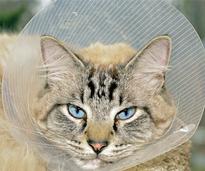
A: Whether your dog is recovering from an injury, illness or surgery, follow the directions given to you by your veterinarian! It is important to look after his needs and ensure that he has time and space to recuperate.

Sick-Dog2.jpg

We feel sorry for our dogs, but remember that consistent rules and guidance are what our dogs need from us for a safe and speedy recovery.

Your dog will probably not have the same energy level as usual. He may want to sleep more. This is a normal reaction to illness or surgery. Think how you feel when you are ill or hurting! Help him heal by minimizing distractions such as children playing, visitors, and other pets. This could mean keeping him in a separate room, pen or crate. You might have to take him outside on a leash to do his business, or in some cases, carrying him out if walking is difficult for him. 

Spend time with your dog on a daily basis, stroking and gently grooming him. During that time, you can look for any changes in his skin or coat, unusual discharges or swelling from the injury. Check with your veterinarian to see if gentle massage is OK. This can increase circulation to any wounds and help in the healing process.

Keep track of his weight and let your veterinarian know immediately if your dog experiences any vomiting or diarrhea. Follow the guidelines provided by your veterinarian when giving any medication to your dog.

Bandages, splints, casts or other dressings may be required to help stabilize a healing fracture or surgical procedure and protect the wound from infection. Dressings can also provide protection from your dog's natural tendency to lick a wound. If your dog continually licks at or attempts to remove the dressing, distract him with a toy or treat, or consider a taste deterrent such as Grannick's® Bitter Apple.

Once you receive the go-ahead from your veterinarian, start your dog on his usual routine. Walking is a great way for you and your dog to reconnect. Go at a slow pace at first, building up his endurance. With your help and patience, he'll be feeling better in no time.

dog-at-vet.jpg

A. We humans use hugs to communicate our affection. Dogs also use gestures - like nuzzling, nudging and rubbing up against either - to show affection. Using human gestures on our canine companions, however, can make them uncomfortable.

Here are some suggestions on how to let your dog know how much you love him WITHOUT making him flinch!

NOTE: Parents, please share this with your children.

  • Respect your dog's space. Since dogs don't hug like we do, they often feel cornered or trapped when hugged. Instead of hugging, try petting him instead.Petting dog.jpg

  • To a dog, petting is similar to nuzzling. It's relaxing and calming to him. The most enjoyable type of petting we can give a dog is to stroke him under his chin and on his chest. Dogs that are hypersensitive to touch because of age or illness may find even the softest touch startling, so keep your movements slow and even. 
  • Don't pick up your small dog. While most of us cannot physically pick up a Bull Mastiff, we don't hesitate to swoop down and lift tiny dogs like Bichons or Chihuahuas. We forget that no matter how small, a dog is still a dog. Being held is simply not natural to a dog and puts him in a position where he may feel trapped, or injured if he should fall.
  • Grabbing your dog's collar to deal with issues like jumping up or bolting out the door can be viewed as very threatening. You may have noticed that the more you pull back on your dog's leash or collar, the more he pulls forward. This is a natural, built-in reaction that can cause damage to the dog's neck and back.
  • Help your dog get used to being handled physically for nail clipping, grooming, washing, and veterinary checkups by gently touching his body, head, and feet every day. Make these sessions pleasant by giving him treats, which are both a reward for his good behavior and a distraction while he is being groomed or examined.

By building a foundation of trust with your dog, he will understand that your touch is not only enjoyable but will keep him safe from harm.

Grooming.jpg

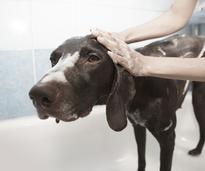
A. First, be sure your dog is used to being handled. Give him some treats to munch on while you touch and play with his toes, belly, head, ears and tail. Praise him if he stays calm. If he gets too excited or upset, stop and try again later. Keep each session brief and upbeat. Don't reassure your dog in soothing tones - this might only make him worry and possibly cause even more anxiety.

Show him a brush, comb, towel, and nail clippers, again giving him praise and treats. You want him to anticipate only pleasant experiences with grooming and grooming tools.
Dog-Grooming.png

Take him to the groomer for a quick trial visit. Have the groomer give a few of your dog's favorite treats to him. Let him get some adoring attention from the staff. He should have a chance sniff around for a bit, too.

Then bring him to a dog park or out for a long walk as a reward. He'll learn that going to the groomer means special time with friendly people, and fun with his favorite person afterwards.


Rachel Baum,CPDT-KA

RACHEL BAUM, CPDT-KA is a Certified Professional Dog Trainer, AKC Canine Good Citizen Evaluator and Red Cross Certified in Pet First Aid. She is a member of the Association of Pet Dog Trainers and the International Association of Canine Professionals, and is recommended by local veterinarians and rescue groups, including Forever Home Greyhounds and the Capital District Humane Association. Rachel does Pre-Pet Counseling (assistance with choosing the right dog for your family), Welcome Puppy (in-home instruction on housebreaking, obedience, problem prevention, crate training) and Behavior Consultation (any dog, any age, any problem). Using dog-friendly techniques, Rachel can help owners establish a relationship with their dog based on love, trust and guidance. She can find solutions to potentially embarrassing problems like jumping up on people, nuisance barking, and pulling on the leash, as well as aggression, separation anxiety, housebreaking, and destructive behavior. Clients (or dogs) with special needs are welcome! Rachel is also available to speak to organizations, schools, or businesses about dog safety and dog behavior. She can be reached at 518-248-1781 or

Albany.com :: Your Official Guide To Albany NY & The Capital Region

Full-Service Internet Marketing: Search Engine Optimization, Website Design and Development by Mannix Marketing, Inc.
Mannix Marketing, Inc. is headquartered near Albany in Glens Falls, New York

For Advertising Information Only: Phone: 518-743-9424 :: Fax: 518-743-0337 :: Advertising Options
All Rights Reserved © 2003-2012, Copyright Mannix Marketing, Inc. Copyright Policies
Other Online Guides: Clifton Park, Saratoga, Lake George, Glens Falls, and the Adirondacks
Albany.com is a privately owned web site and is not affiliated with the City of Albany, Albany County or any other government organization.