Guide to Albany
4/6/2012 :: Albany, NY :: Albany Jobs :: Contests :: Blogs :: Advertising :: Deals :: Classifieds :: My Account :: My Planner :: Sitemap
dog talk

A. Digging is a normal behavior for dogs but it can be made worse by boredom, stress, underground critters like moles or voles, heat, or in rare cases, a diet deficiency. Knowing this doesn't mean you have to live with those myriad holes in your yard!Digging dog2.jpg


Here are a few things you can try to persuade your digging dog not to excavate your lawn. Keep in mind that all dogs are different, so what works on one dog may not work on another. A combination of training, prevention and safe deterrents is the most effective approach.


  • Diet is an important factor. A healthy, balanced diet can assist in reducing the digging. Talk to your veterinarian for advice on nutrition.

  • A busy dog is a happy dog. Keep yours mentally stimulated with a variety of dog toys that he can play with independently. Food-based puzzle toys, like Kongs and Buster Cubes, are practically indestructible and don't require a human being to be used effectively, like a ball or a rope tug.

  • Try diverting your dog to an acceptable place to do his digging. Create a sandbox in a child's wading pool. Fill it with dirt, heavy duty dog toys, and some biscuits. Guide your dog there repeatedly so he gets the message. Be sure to locate the sandbox in a shady place where he can lie in it to cool off.
  • To deter your dog from the garden, you may need to fence to keep the most determined canines from exploring your vegetable seedlings. A spray of Bitter Apple over the ground can be effective with some dogs, too.
  • Don't reprimand your dog when you discover the holes. He won't connect your scolding with his digging, and you could inadvertently be discouraging him from coming when called.

Digging dog.jpg

A. We humans use hugs to communicate our affection. Dogs also use gestures - like nuzzling, nudging and rubbing up against either - to show affection. Using human gestures on our canine companions, however, can make them uncomfortable.

Here are some suggestions on how to let your dog know how much you love him WITHOUT making him flinch!

NOTE: Parents, please share this with your children.

  • Respect your dog's space. Since dogs don't hug like we do, they often feel cornered or trapped when hugged. Instead of hugging, try petting him instead.Petting dog.jpg

  • To a dog, petting is similar to nuzzling. It's relaxing and calming to him. The most enjoyable type of petting we can give a dog is to stroke him under his chin and on his chest. Dogs that are hypersensitive to touch because of age or illness may find even the softest touch startling, so keep your movements slow and even. 
  • Don't pick up your small dog. While most of us cannot physically pick up a Bull Mastiff, we don't hesitate to swoop down and lift tiny dogs like Bichons or Chihuahuas. We forget that no matter how small, a dog is still a dog. Being held is simply not natural to a dog and puts him in a position where he may feel trapped, or injured if he should fall.
  • Grabbing your dog's collar to deal with issues like jumping up or bolting out the door can be viewed as very threatening. You may have noticed that the more you pull back on your dog's leash or collar, the more he pulls forward. This is a natural, built-in reaction that can cause damage to the dog's neck and back.
  • Help your dog get used to being handled physically for nail clipping, grooming, washing, and veterinary checkups by gently touching his body, head, and feet every day. Make these sessions pleasant by giving him treats, which are both a reward for his good behavior and a distraction while he is being groomed or examined.

By building a foundation of trust with your dog, he will understand that your touch is not only enjoyable but will keep him safe from harm.

Grooming.jpg

Less than two percent of cats and only 15-20 percent of dogs are returned to their owners, according to the National Council on Pet Population Study and Policy. In honor of National Pet ID Week (April 15-21), let's all give our pets the best chance of coming home in the event they are lost!

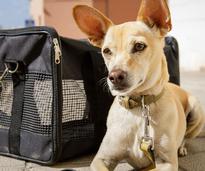
New technologies mean you now have more options than ever for protecting your pets if they are separated from you. For example, microchipping is a popular process in which a Dog tags1.JPGmicrochip about the size of a piece of rice is implanted under your pet's skin.

When the microchip is scanned at a veterinarian's office or animal shelter, it will pull up your pet's information in a national database. If your pet is already microchipped, find your microchip registration card--or contact the vet or shelter that did the implant to learn where it is registered--and make sure your contact information is current.

However, advanced forms of ID do NOT mean you should abandon traditional ID tags on your pets' collars! This is still the quickest, simplest way for the average person on the street to help reunite you with your pet.


In honor of National Pet Day, celebrated on April 11, 2012, take the Pet Owner's Pledge:

I recognize that having a companion animal to love, enjoy and respect is a privilege.

A pet is a living creature, not a "throwaway" item.

My family and I are aware of our daily responsibility in caring for a pet and the changes this will make in our lives.

My pet depends upon me for safe shelter, fresh water, wholesome food, grooming, proper veterinary care and training. I will provide these to the best of my ability.

When selecting my pet, I will consider the life expectancy, physical characteristics and behavioral differences among animals.

I will begin to properly socialize and train my pet when it is one to two months old.

I will control my pet's ability to reproduce in an effort to prevent the cruel over-production of unwanted animals that will be abandoned.

I will obey all laws pertaining to my pet in order to prevent it from annoying or injuring my neighbors.

My pet will be properly identified in a suitable manner at all times. If my pet becomes lost, I will make every effort to promptly find it.

If for any reason I can no longer keep my pet, I will not abandon it. I will do my best to find my pet a suitable home, take it to a reputable animal shelter, or, if no other choice exists, have the animal euthanized by a veterinarian.


Signed _____________________________________   


A: NO!!

Just because the weather is nice doesn't mean your dog should be relegated to the backyard.

Lonely dog.jpg

Dogs are social animals. Letting a dog live in a yard with little or no human companionship is one of the most psychologically damaging things an owner can do to a dog.

Dogs have the ability to learn and to be housetrained. They are happier, safer, and feel more secure and contented, inside a house, with people.

When dogs are left outside, they display many more behavioral problems, such as digging, barking, whining, chewing, and trying to escape. Dogs left in the backyard are also harder to train because they don't have the opportunity to develop a strong bond with humans. Sometimes they become so fearful of people that they may become aggressive.

Good dog owners should keep their dogs in the house with them, including sleeping inside the house at night. You don't have to entertain your dog constantly. Dogs just want to be near their human companions.

Never tie or chain your dog outside. Dogs that are tied up suffer extreme frustration which can result in hyperactivity, and sometimes aggression against you, your family

Children-Play-Dog-303058.jpg

or friends. Dogs that are tied up cannot escape from other animals or people who mean to do them harm. They can also easily become entangled and do bodily harm to themselves.

If your dog is going to be outside in the yard for any period of time, provide him with a shady place, a dog house for rainy weather, chew toys or bones, and plenty of fresh water. 


Make the time to train your dog so that he is well behaved inside and out, and is truly a member of your family


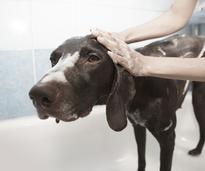
A. First, be sure your dog is used to being handled. Give him some treats to munch on while you touch and play with his toes, belly, head, ears and tail. Praise him if he stays calm. If he gets too excited or upset, stop and try again later. Keep each session brief and upbeat. Don't reassure your dog in soothing tones - this might only make him worry and possibly cause even more anxiety.

Show him a brush, comb, towel, and nail clippers, again giving him praise and treats. You want him to anticipate only pleasant experiences with grooming and grooming tools.
Dog-Grooming.png

Take him to the groomer for a quick trial visit. Have the groomer give a few of your dog's favorite treats to him. Let him get some adoring attention from the staff. He should have a chance sniff around for a bit, too.

Then bring him to a dog park or out for a long walk as a reward. He'll learn that going to the groomer means special time with friendly people, and fun with his favorite person afterwards.

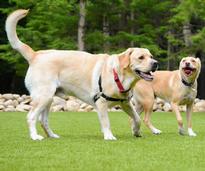
A. Dog parks can be a great way to socialize your dog, but not all dogs do well at them. Here are some things to think about before you bring your dog to a dog park: Dog Park.jpg

  • Know your dog. If your dog is naturally cautious, shy, or doesn't get along well with other dogs, a dog park is not the place to help him overcome his issues. Meeting too many dogs at once is the equivalent of putting someone with claustrophobia in a closet. Too much too soon. Try introducing your dog to a friend's dog that you know interacts well with other dogs. A one-on-one play date might be just the ticket for a fun playtime for your best friend.
  • Vaccinate your dog. For his safety as well as the other dogs at the park, keep him up-to-date on his inoculations and worming medications.
  • Check the park out first. Visit the park without your dog and watch the dogs there interact. If the dogs seem too rough for your dog, come back at another time or try a different dog park.
  • Make the initial visit a short one. 15 minutes or so is enough. Slowly increase the length of your stays as your dog becomes more comfortable there.
  • Pick the best time to go. Weekday evenings, weekends and holidays are the busiest times at dog parks. Try to avoid going when your dog could be easily overwhelmed.
  • Supervise your dog. It's easy to get distracted talking to other owners. Keep an eye on your dog at all times to make sure his interactions with other dogs are safe. Watch his body language and be ready to remove him if he seems stressed or if another dog won't leave him alone.
  • Let your dog off leash as soon as you enter unleashed areas. Mixing leashed and unleashed dogs can create a hostile situation. A leashed dog can't make the choice his natural instinct tells him of "fight or flight"--if he cannot take flight, he may have to fight.
  • Leave children at home. You can't watch your kids and your dog at the same time. Rowdy dogs can scare - and possibly hurt - children.
  • Don't bring a puppy. Puppies less than four months old aren't fully immunized yet and are at higher risk for contracting diseases. They are also very vulnerable to being traumatized by another dog's aggressive behavior.
  • Don't bring toys or food. Most parks already have plenty of balls and toys that other people have brought. Rewarding your dog with treats or giving him toys in front of other dogs can create jealousy and aggression.
  • Know when to leave. Remove your dog from the park if he is being threatened or bullied and seems fearful. If your own dog begins to display aggressive behavior by becoming overexcited or threatening toward other dogs, take him out. A tired dog that is panting heavily also should go home.
  • Watch for potential dogfights. Don't allow your dog's over excitement turn into a fight.
Its not a failing of your dog if he doesn't like going to the dog park. A hike with you or a game of fetch in the backyard can be just as fun and rewarding for him. Don't force your dog to be a party animal if it is just not his temperament.


There's no denying that dogs are important members of our families. We tend to make just as much a fuss over them at holiday times as we do our human companions. February 14th is no exception.

Please don't buy flowers or chocolates for your dog! He'll probably eat the posies and as everyone knows, chocolate is deadly for dogs. Instead, here are a few ideas for making the day special for you and your hound:
No-chocolate-for-pet.jpg

  • Spend extra time with your dog. A long walk, a hike in the woods, a game of fetch in the backyard is the best gift you can give any dog.
  • If your dog is looking shaggy and isn't as fragrant as he should be, schedule a "pet spa day" either at the groomer or at home. 
  • Kongs.jpgIf you really must buy something for your dog, take him shopping with you to a pet-friendly store. Let him pick out a new toy, with your guidance. Keep in mind that food-based puzzle toys - like Kongs, Buster Cubes, and Tug-a-Jugs - will keep him busy and happy longer than any squeaky toy.
  • Another wonderful gift is to make an appointment with your veterinarian for your dog's annual vet check-up, if you haven't already done this.
  • Finally, if you like to bake, find a recipe for homemade dog biscuits. Non-cooks can pick up a gourmet treat at a local pet boutique.
However you celebrate this Valentine's Day with your best friend, have fun and stay safe!dog-valentines-day.jpg
A. I'll bet your dog - and mine does this, too - looks right at me when I'm talking to him, tilts his head, and seems to completely comprehend whatever I tell him.

Dogs are experts at reading our body language because they are pros at using their OWN bodies as a way of communicating with us. When you think about it, its really the only way (besides barking) that they do "talk" to us, and to other dogs, too. 

Does your dog nudge your hand sometimes? Its a pretty good guess that he is asking you to pet him. When he drops a ball next to you and then looks from the ball to you, you probably figure that he wants to play. These are just two examples of how dogs communicate with their bodies.friendly.jpg

Your dog watches you all the time. Does he get excited when you put on an old pair of running shoes? He's watched you put them on before taking him for a walk many times, so he knows what happens next. He probably gets excited and wags his tail. Now YOU know what he is saying "Let's Go!"

You can learn your own dog's language by watching him. After awhile, you'll start to know what he is thinking, and what he will most likely do next. So next time when he looks at your sofa, then walks over to the sofa, then sniffs the sofa, you might guess (correctly) that he is about to jump up on it. If you don't want him on the sofa, you can stop him BEFORE he gets on it.

After awhile, you'll be (almost) as good at reading your dog's body language as he is at reading yours!

For fun, try taking a dog body language quiz by clicking HERE.

Sit.jpeg


A. Sure you can. But it helps to have help.

In fact, NOW is a great time to learn HOW to train your dog. The Association of Pet Dog Trainers has declared January as Train Your Dog Month!
Train Your Dog Month logo.gif
Dogs that are not trained often exhibit unwanted behaviors like destructive chewing, jumping on people, uncontrolled barking, pulling on leash, and housebreaking problems. Untrained dogs are more likely to end up at shelters, abandoned, or abused.

Socializing and training your dog means that you and your friends and family will enjoy your dog more. Training is simple and fun and creates a bond between you and your dog.

Its easy to get started. Go the APDT web site and click on Trainer Search or click HERE.

apdt_logo.jpg

You can also go to the APDT's Facebook site or participate in webinars on subjects like Dog Safety for Kids and Loose Leash Walking.

A professional dog trainer will give you the skills, confidence, and support to help your dog become the best family companion he or she can be.


Rachel Baum,CPDT-KA

RACHEL BAUM, CPDT-KA is a Certified Professional Dog Trainer, AKC Canine Good Citizen Evaluator and Red Cross Certified in Pet First Aid. She is a member of the Association of Pet Dog Trainers and the International Association of Canine Professionals, and is recommended by local veterinarians and rescue groups, including Forever Home Greyhounds and the Capital District Humane Association. Rachel does Pre-Pet Counseling (assistance with choosing the right dog for your family), Welcome Puppy (in-home instruction on housebreaking, obedience, problem prevention, crate training) and Behavior Consultation (any dog, any age, any problem). Using dog-friendly techniques, Rachel can help owners establish a relationship with their dog based on love, trust and guidance. She can find solutions to potentially embarrassing problems like jumping up on people, nuisance barking, and pulling on the leash, as well as aggression, separation anxiety, housebreaking, and destructive behavior. Clients (or dogs) with special needs are welcome! Rachel is also available to speak to organizations, schools, or businesses about dog safety and dog behavior. She can be reached at 518-248-1781 or

Albany.com :: Your Official Guide To Albany NY & The Capital Region

Full-Service Internet Marketing: Search Engine Optimization, Website Design and Development by Mannix Marketing, Inc.
Mannix Marketing, Inc. is headquartered near Albany in Glens Falls, New York

For Advertising Information Only: Phone: 518-743-9424 :: Fax: 518-743-0337 :: Advertising Options
All Rights Reserved © 2003-2012, Copyright Mannix Marketing, Inc. Copyright Policies
Other Online Guides: Clifton Park, Saratoga, Lake George, Glens Falls, and the Adirondacks
Albany.com is a privately owned web site and is not affiliated with the City of Albany, Albany County or any other government organization.